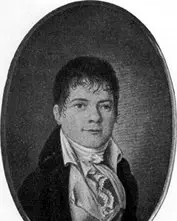
- Born
- 6 August 1784Glarus, Switzerland
- Died
- 24 December 1864Winterthur, Switzerland · aged 80
Heinrich Hössli
A Swiss milliner whose historical research became an early defence of love between men.
Heinrich Hössli was born in Glarus in 1784. He trained as a hatter and became a successful milliner and textile merchant. He married Elisabeth Grebel in 1811 and had two sons, although the family spent much of its life in separate households.
The 1817 execution of Franz Desgouttes, convicted of killing a young man he loved, helped turn Hössli towards the question of how society treated desire between men. He approached the writer Heinrich Zschokke before undertaking the work himself.
Without a university education, Hössli gathered literary and historical evidence into “Eros. Die Männerliebe der Griechen”, published in two volumes in 1836 and 1838. He challenged the idea that love between men was inherently criminal or immoral, comparing the prejudices behind persecution with those that had sustained witch trials.
The book faced hostility and restrictions on its sale, but later readers recognised its significance in the history of sexual rights. Hössli’s own intimate life remains poorly documented, so the argument should not be treated as proof of his sexuality. He died in 1864, aged 80.