- Born
- 6 August 1928Pittsburgh, Pennsylvania, USA
- Died
- 22 February 1987New York City, USA · aged 58
Andy Warhol
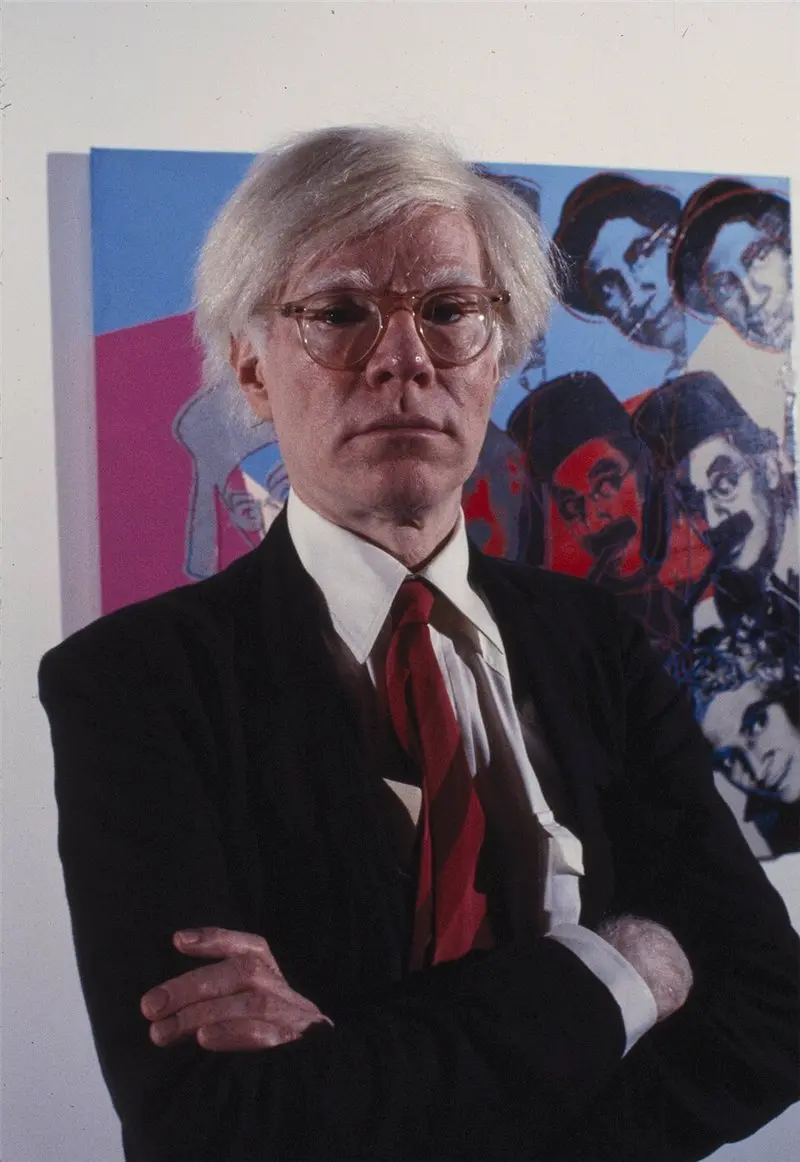
Andy Warhol turned commercial images, celebrity and repetition into art. His films, studio relationships and private records also reveal a queer social world inseparable from his public work.
Andy Warhol was born in Pittsburgh, Pennsylvania, in 1928. Originally named Andrew Warhola, he was the youngest son of immigrants from the European region that is now Slovakia. After studying pictorial design, he moved to New York in 1949 and built a successful career as a commercial illustrator.
Advertising and magazine work gave him a close knowledge of how images attract attention and circulate. When he turned more fully towards fine art, he carried those methods with him. Familiar products and publicity photographs became material through which to examine recognition, consumption and the apparent interchangeability of modern images.
His Campbell's soup can paintings and celebrity silkscreens became defining works of Pop Art. Marilyn Monroe, Elvis Presley and other public figures appeared as repeatable images, at once familiar and strangely distant. Repetition could suggest abundance or glamour, but it could also make a face seem vulnerable to the processes that turned it into a commodity.
Warhol's subjects included catastrophe as well as fame. Images of car crashes, death and disaster brought the visual habits of newspapers into the gallery. The work makes it difficult to decide where documentation ends and spectacle begins, or how repeated exposure changes the viewer's response to suffering.
At the Factory, his studio, artists, musicians, writers and performers collaborated on projects that extended well beyond painting. Warhol supported the Velvet Underground and developed films in which duration, performance and the presence of the camera could matter more than a conventional plot.
“Blow Job”, “My Hustler” and “Lonesome Cowboys” brought male desire and queer performance into experimental cinema. Figures including Candy Darling became part of a creative world that challenged mainstream expectations about gender and visibility. The freedom associated with the Factory also depended on complicated relationships between attention, influence and vulnerability.
Warhol's intimate relationships overlapped with this world. Jed Johnson, who worked at the Factory and became an interior designer, was his partner for twelve years. Later, Warhol was involved with Jon Gould. His diaries and other surviving records allow these relationships to be understood alongside a public persona that often cultivated distance and ambiguity.
In 1968, Valerie Solanas shot and seriously wounded him. The attack required extensive medical treatment and had lasting effects on his health and sense of security. His later work continued across painting, publishing, film and the documentation of his own social surroundings.
Warhol died in New York on 22 February 1987, after gallbladder surgery. His art remains closely connected to the systems through which people become visible: advertising, entertainment, news and the social networks that make an image seem to belong to everyone.