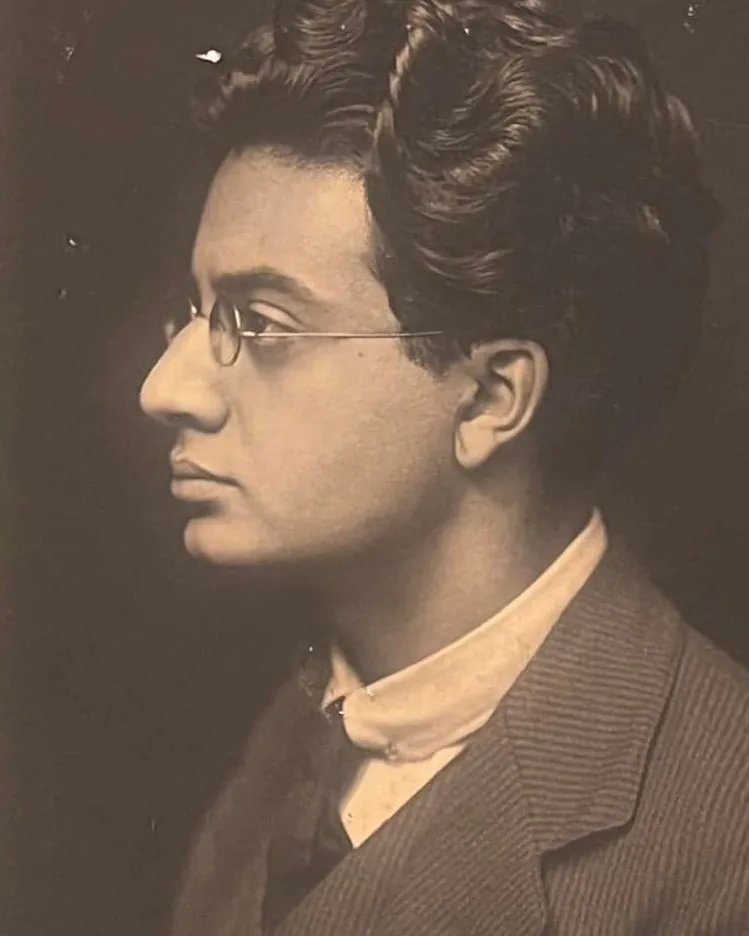
- Born
- 14 August 1892Chingford, United Kingdom
- Died
- 15 October 1988Winfrith Newburgh, United Kingdom · aged 96
Kaikhosru Shapurji Sorabji
An outsider as a gay man of mixed heritage, he wrote some of the longest and most difficult piano works ever – and banned their performance for forty years.
Kaikhosru Shapurji Sorabji was born Leon Dudley Sorabji in Chingford near London, the only child of a Parsi engineer from Bombay and an English mother. At school he was mistreated, and a tutor mocked India and hit him. As a young man he felt deeply alienated from English society, both as a homosexual and because of his mixed heritage. Around 1913 he joined the Parsi community and changed his name.
Largely self-taught, he became a music critic and composer. His letters to the composer Peter Warlock document his feelings of otherness. In 1919 he played his First Piano Sonata to Ferruccio Busoni. Sorabji wrote vast, intricate piano works that blended baroque forms with complex rhythms and lavish ornamentation; his “Opus clavicembalisticum” lasts around four hours. Among his works are seven symphonies for solo piano and 100 Transcendental Studies.
Between 1920 and 1936 he performed some of his works himself. Then, disappointed by poor performances and hostile critics, he imposed a ban on public performances of his music, which he lifted only in 1976. In the meantime he remained known mainly through his sharp-tongued writings.
He withdrew from London and settled in Corfe Castle in Dorset, where he lived a secluded life for decades with his companion. He died in 1988, aged 96. Much of his music was published only in the 2000s; since then interest in it has grown, and pianists have taken on his monumental works.