- Born
- 12 August 1880Bournemouth, England
- Died
- 7 October 1943London, England · aged 63
Radclyffe Hall
The author of “The Well of Loneliness” wrote the most famous lesbian novel of her time – and saw it banned in Britain.
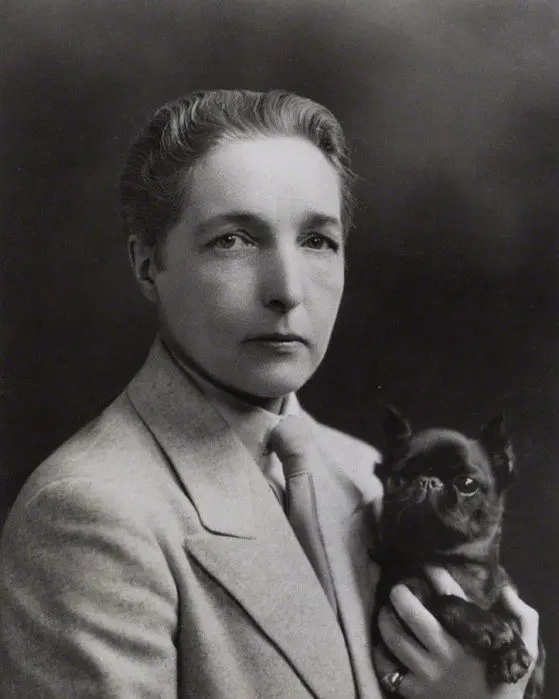
Marguerite Radclyffe Hall had a lonely childhood in Bournemouth with a mother who rejected her. A large inheritance made her independent at 21. She wore tailored suits, cut her hair short and was called “John” by her friends.
She first published poetry, some of which was set to music. In 1907 she met the singer Mabel Batten, who became her partner. After Batten’s death in 1916 she lived with Una Troubridge, a sculptor and translator, for the rest of her life. In the 1920s she wrote novels, and “Adam’s Breed” (1926) won two major literary prizes.
In 1928 she published “The Well of Loneliness”, the story of Stephen Gordon, a woman who loves women and is described, in the medical language of the time, as an “invert”. The novel was not sexually explicit, but it pleaded for tolerance. A British court declared it obscene and ordered all copies destroyed; in the United States it was allowed after a court case. The trial made the book world-famous, and for decades it was the novel that lesbian women around the world read to know they were not alone.
Radclyffe Hall died of cancer in London in 1943, aged 63.