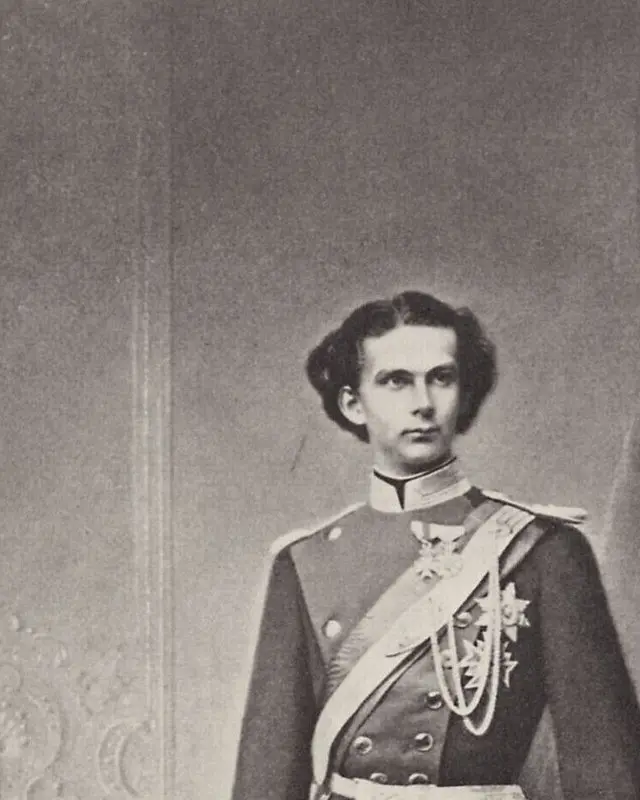
- Born
- 25 August 1845Munich, Germany
- Died
- 13 June 1886Lake Starnberg, Germany · aged 40
Ludwig II of Bavaria
The “fairy-tale king” built Neuschwanstein, adored Wagner – and wrote in his diaries about his struggle against his love for men.
Ludwig II was born at Nymphenburg Palace in Munich and became King of Bavaria in 1864, aged only 18. Shy and romantic, he had little interest in politics. Bavaria lost its war against Prussia in 1866, and in 1871 became part of the German Empire.
Ludwig devoted himself to art. He was the great patron of the composer Richard Wagner, without whom operas such as “Tristan und Isolde” and the Bayreuth Festival might never have been realised. He built dream castles: Neuschwanstein, Linderhof and Herrenchiemsee, today among the most visited sights in Germany. He paid for them from his private funds and ran up huge debts.
In 1867 he became engaged to his cousin Sophie Charlotte, but broke off the engagement. He never married. In his diaries, which survive in part, he wrote about his struggle against “sinful” desires and swore to resist them. He had close and passionate friendships with men, including his equerry Richard Hornig and the actor Josef Kainz. Historians today largely agree that Ludwig loved men.
In June 1886 the government had him declared insane and deposed. The next day he and his psychiatrist were found dead in Lake Starnberg. The circumstances of his death remain unexplained.