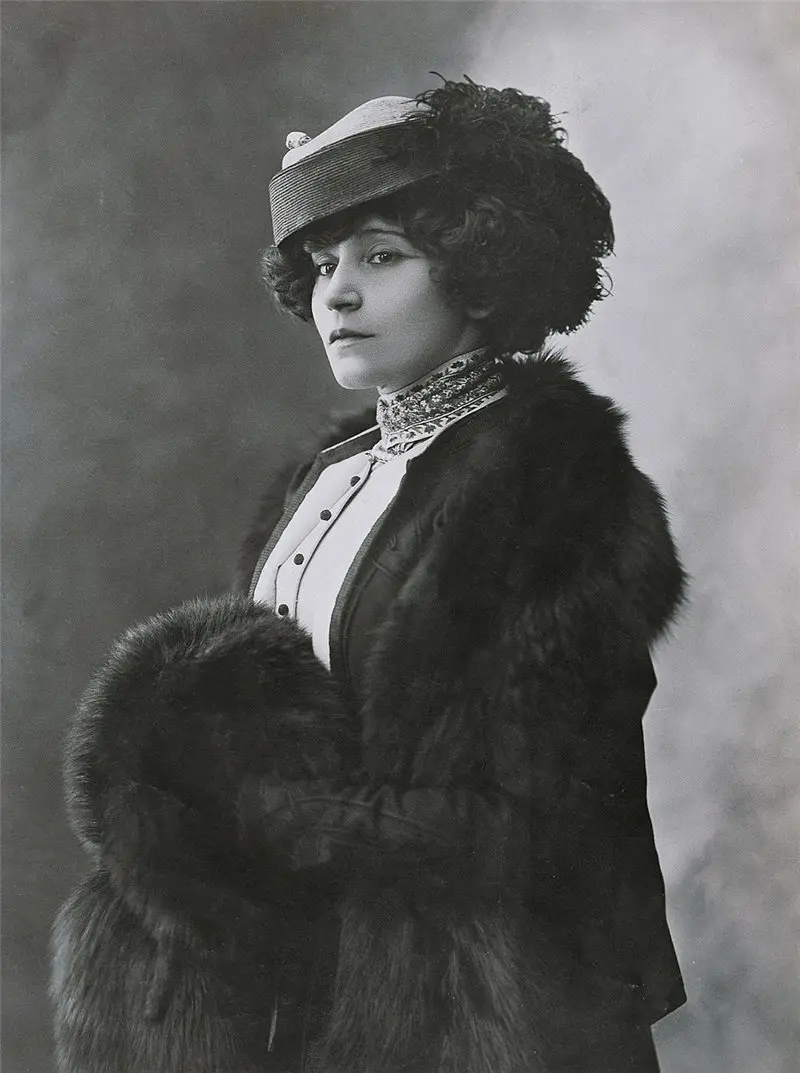
- Born
- 28 January 1873Saint-Sauveur-en-Puisaye, France
- Died
- 3 August 1954Paris, France · aged 81
Colette
She reclaimed authorship of her early novels and made women’s desire, work and independence subjects of lasting literary importance.
Sidonie-Gabrielle Colette was born in Saint-Sauveur-en-Puisaye, France, in 1873. At twenty she married Henry Gauthier-Villars, known as Willy. Her early “Claudine” novels appeared under his name, bringing commercial success before she established an independent literary identity.
After their separation, Colette earned a living in music halls. Her relationship with Mathilde de Morny, known as Missy, became public, and a kiss during their 1907 Moulin Rouge performance caused a scandal. Her stage work and relationships challenged the boundaries of respectable femininity.
Novels including “Chéri” (1920) and “Gigi” (1944) examined desire, ageing and the negotiations within intimate relationships. In “Le Pur et l’Impur” (1932), she reflected on sexual experience, including love between women and between men, without reducing it to a simple moral classification.
Colette married twice more and eventually became a highly honoured figure in French literature. She became president of the Académie Goncourt in 1949. After her death in 1954, France accorded her a national funeral, although the Church refused a religious service. The public ceremony marked a striking change from the scandals of her earlier career.