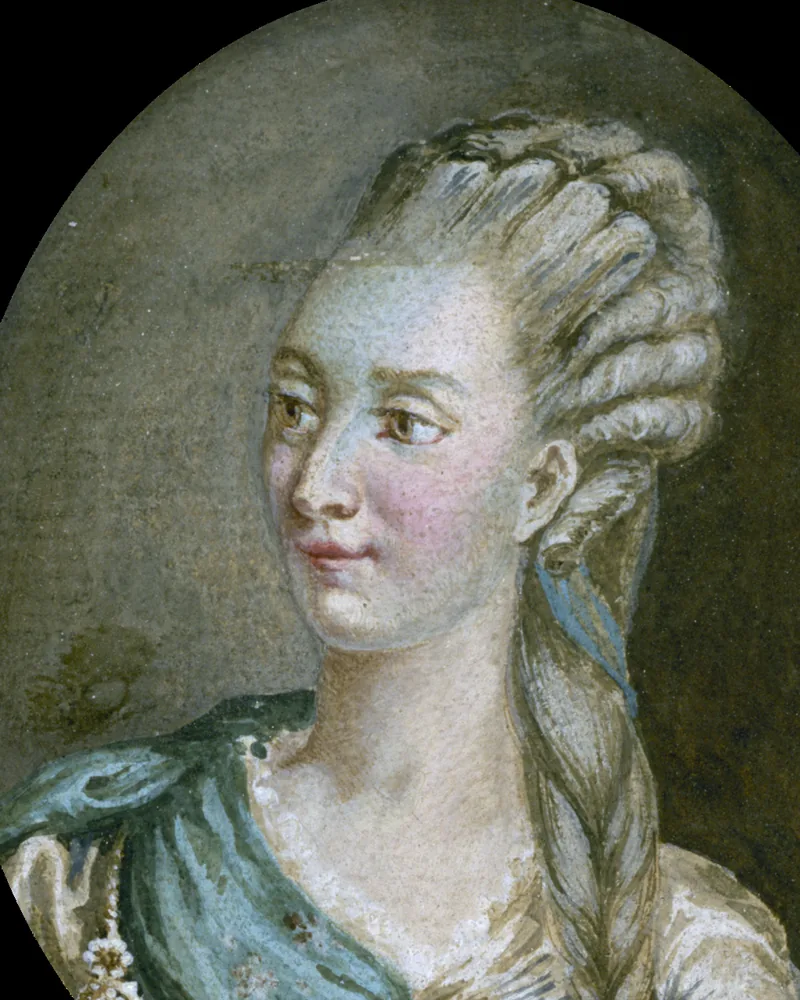
- Born
- 3 March 1756Nancy, France
- Died
- 15 January 1815Paris, France · aged 58
Mademoiselle Raucourt
The great tragedienne of the Comédie-Française loved women – and when the Church refused her coffin, the crowd stormed the doors.
Mademoiselle Raucourt was born Françoise Saucerotte in Nancy, the daughter of an actor. As a child she was already playing tragic roles in Spain. In 1772, aged 16, she made her debut at the Comédie-Française in Paris as Dido and became famous overnight; people queued outside the theatre from the morning.
Her success did not last. Paris soon talked more about her life than about her roles: she spent more than she earned and made little secret of her love for women. One of her lovers was the opera singer Sophie Arnould. An anonymous pamphlet even claimed she led a secret society of lesbian women, which never existed. To escape her creditors she left France in 1776 and lost her place in the company. Queen Marie Antoinette made her return possible in 1779, and Raucourt became one of the finest tragic actresses in France, famous as Medea, Phaedra and Cleopatra.
During the Revolution the royalist actress was imprisoned for months. In prison she met Henriette Simonnot-Ponty, who remained her partner until her death. Napoleon later granted her a pension and in 1806 sent her to Italy to establish a French theatre company there.
When she died in Paris in 1815, aged 58, the priest of the church of Saint-Roch refused to receive the coffin of an actress. The crowd following the funeral procession forced its way into the church until a priest sent by King Louis XVIII gave the blessing. She is buried in Père Lachaise Cemetery.