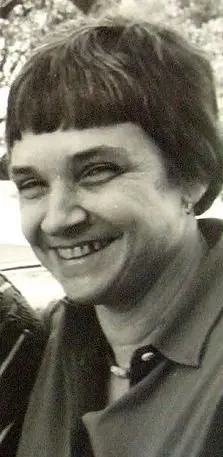
- Born
- 16 May 1929Baltimore, Maryland, USA
- Died
- 27 March 2012Santa Cruz, California, USA · aged 82
Adrienne Rich
Her poetry and essays connected private experience with public power, making motherhood, lesbian life and the limits of freedom central subjects of her work.
Adrienne Cecile Rich was born in Baltimore, Maryland, in 1929. She was still at Radcliffe College when W. H. Auden selected her first collection, “A Change of World” (1951), for the Yale Series of Younger Poets. In 1953, she married the economist Alfred Conrad; they had three sons.
During the 1960s, her poems moved away from formal restraint towards a more direct engagement with racism, the Vietnam War and women's lives. “Diving into the Wreck”, published in 1973, won a National Book Award in 1974, sharing the poetry award with Allen Ginsberg's “The Fall of America”. Rich accepted her award on behalf of women whose voices had been excluded, in solidarity with fellow nominees Audre Lorde and Alice Walker.
In 1976, she began a relationship with the writer Michelle Cliff that lasted for the rest of her life. Her writing increasingly addressed lesbian experience. In “Compulsory Heterosexuality and Lesbian Existence” (1980), she examined heterosexuality as a social institution and proposed a “lesbian continuum” encompassing connections and solidarity between women.
Rich continued to question the relationship between art and power. In 1997, she refused the National Medal of Arts because she opposed the Clinton administration's politics. She died in Santa Cruz, California, in 2012, leaving a body of poetry and prose that repeatedly asked whose experiences literature could make visible.