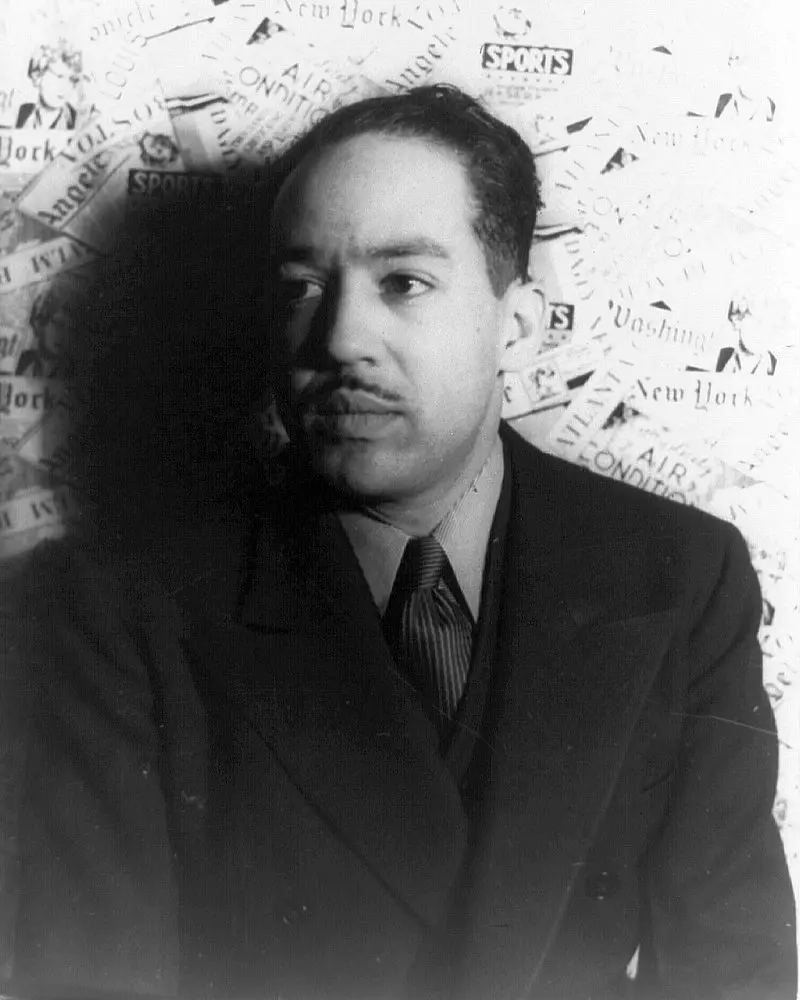
- Born
- 1 February 1901Joplin, Missouri, USA
- Died
- 22 May 1967New York City, USA · aged 66
Langston Hughes
The poet of the Harlem Renaissance gave Black America a voice – his own private life remains a subject of debate.
Langston Hughes grew up mostly with his grandmother in Lawrence, Kansas; his parents separated when he was a baby. At 19 he wrote “The Negro Speaks of Rivers”, one of the most famous poems in American literature.
In the 1920s he became a leading voice of the Harlem Renaissance. His collection “The Weary Blues” (1926) brought the rhythms of jazz and blues into poetry. In poems, novels, plays and a long-running newspaper column he wrote about the everyday lives of Black working people, with humour and pride, and against racism.
Hughes never married and was very private. Scholars have long debated his sexuality: some, such as the filmmaker Isaac Julien in “Looking for Langston” (1989), have read hidden desire for men in his poems and in his circle of friends in Harlem; his most important biographer, Arnold Rampersad, found little evidence of relationships with either men or women. Hughes is honoured here as a figure whose life is claimed by queer history, with this uncertainty.
He died in New York in 1967, aged 66. His home in Harlem is a landmark.