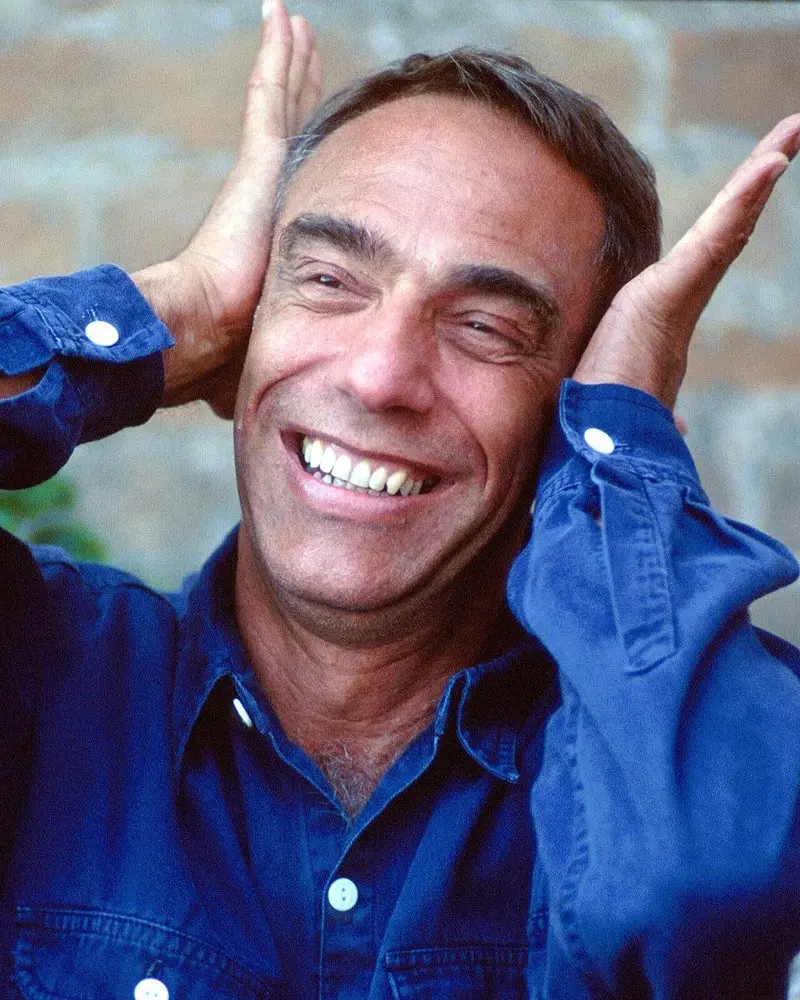
- Born
- 31 January 1942Northwood, England
- Died
- 19 February 1994London, England · aged 52
Derek Jarman
He brought queer history and political anger into experimental cinema, then made illness, love and a coastal garden part of his final work.
Derek Jarman was born in Northwood, England, in 1942. He studied art and began as a painter and designer, creating the sets for Ken Russell’s “The Devils” (1971) before developing his own films.
“Sebastiane” (1976), made with Paul Humfress, presented the Christian martyr’s story through male desire and Latin dialogue. “Jubilee” (1978), “Caravaggio” (1986) and “Edward II” (1991) combined history, theatrical images and contemporary politics. Repeated collaborations, including with Tilda Swinton, helped sustain work made outside conventional commercial filmmaking.
Jarman was diagnosed with HIV in 1986 and soon made his status public. He campaigned against Section 28 and wrote about sexuality, illness and political hostility in books and diaries. At Prospect Cottage in Dungeness, he created a garden from plants, stones and objects found on the shingle shore.
His final feature, “Blue” (1993), pairs an unchanging blue image with voices, music and accounts of failing sight and AIDS. The soundtrack makes the absent images intensely present. Jarman died in London in 1994, aged 52, leaving films and writing in which private experience remains inseparable from public struggle.