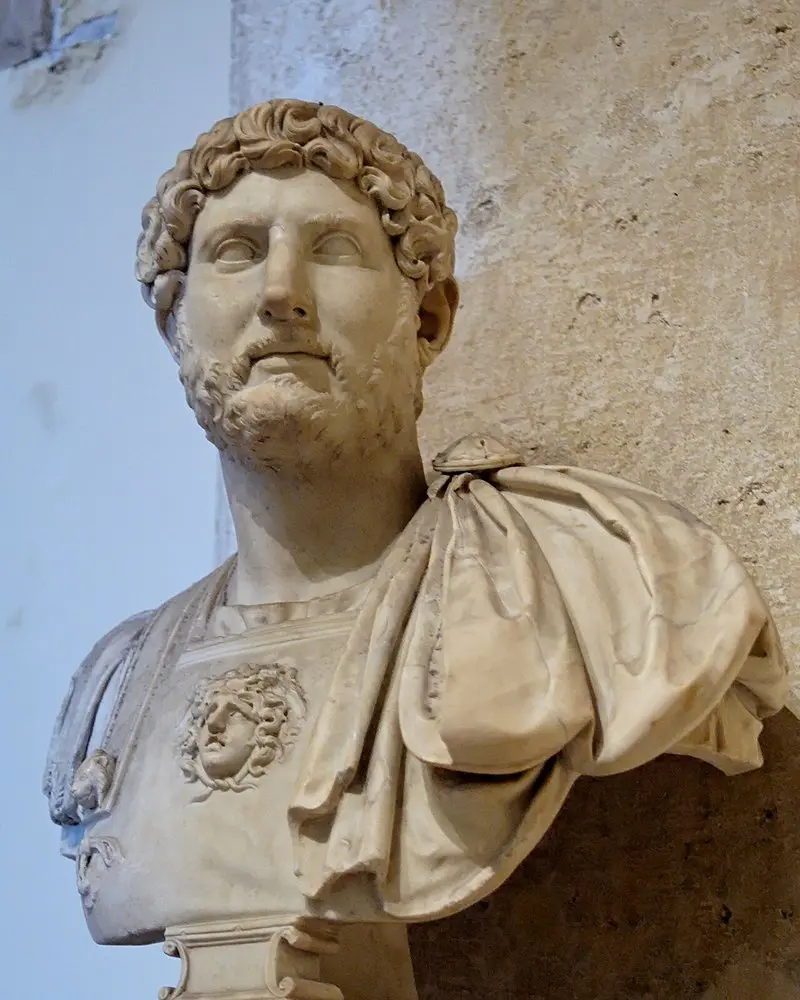
- Born
- 24 January 76Italica, Hispania (today Spain)
- Died
- 10 July 138Baiae, Italy · aged 62
Hadrian
A Roman emperor whose public commemoration of Antinous gave a private loss an extraordinary afterlife.
Publius Aelius Hadrianus was born in the Roman Empire in AD 76. His family came from Italica in Hispania, although accounts differ over whether he was born there or in Rome. The dates of his life here follow the Julian calendar.
Hadrian succeeded Trajan as emperor in 117. He withdrew from some recent conquests and concentrated on securing the empire’s frontiers, including the construction of Hadrian’s Wall in Britain. Extensive travel, a love of Greek culture and ambitious building projects shaped his reign, alongside harsh military repression, notably in Judaea.
He was married to Vibia Sabina, but his relationship with Antinous, a young man from Bithynia, became an enduring part of his history. After Antinous drowned in the Nile in 130, Hadrian founded Antinoopolis in his memory and promoted his worship. Surviving statues and coins show the reach of that commemoration.
The relationship belonged to an ancient world with different expectations about age, status and sexuality. Its importance is clear, even if modern identity labels cannot describe it precisely. Hadrian died at Baiae in 138, aged 62.