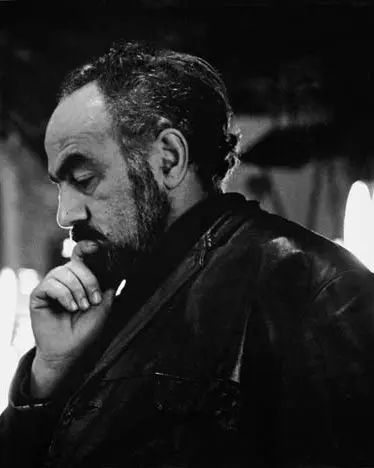
- Born
- 9 January 1924Tbilisi, Georgia
- Died
- 20 July 1990Yerevan, Armenia · aged 66
Sergei Parajanov
A visionary filmmaker whose dreamlike films defied Soviet realism – he was sent to a labour camp, among other things for homosexuality.
Sergei Parajanov was born in Tbilisi to Armenian parents and studied film in Moscow. After a series of conventional films he found his own visual language in Ukraine with “Shadows of Forgotten Ancestors” (1965), a colourful, poetic tale of love in the Carpathian mountains, which became an international sensation.
His film “The Color of Pomegranates” (1969), about the 18th-century Armenian poet Sayat-Nova, consists of tableau-like images full of symbols, fabrics and rituals. It is regarded as one of the most original films ever made. The Soviet authorities, however, considered his work formalist and nationalist, and Parajanov openly supported dissidents.
In 1973 he was arrested and sentenced on charges that included homosexuality, then a criminal offence in the Soviet Union. Filmmakers and artists around the world protested. He spent four years in labour camps. He had been married twice and had relationships with men and women; he spoke of himself with provocative openness.
After his release he was long banned from working. Only in the 1980s could he make films again, including “The Legend of Suram Fortress” and “Ashik Kerib”. He died of cancer in Yerevan in 1990, aged 66.