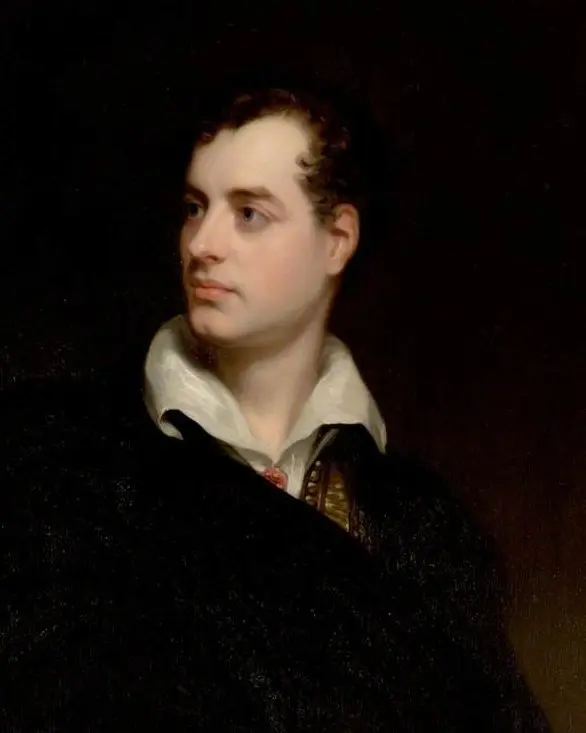
- Born
- 22 January 1788London, England
- Died
- 19 April 1824Missolonghi, Greece · aged 36
Lord Byron
Romanticism’s most famous poet loved women and young men – and died fighting for Greek independence.
George Gordon Byron was born in London with a club foot and grew up in poverty with his mother in Scotland, until at the age of ten he inherited the title of Lord Byron and an estate. At school at Harrow and at Cambridge he formed passionate attachments to other boys; at Cambridge he loved a choirboy, John Edleston, whom he later mourned in poems.
On a long journey through Portugal, Spain, Albania and Greece he had relationships with young men, which he hinted at in letters to friends, since sex between men was punishable by death in England. In 1812 the first cantos of “Childe Harold’s Pilgrimage” made him famous overnight.
In London Byron had many affairs with women; rumours of a relationship with his half-sister Augusta Leigh caused a scandal. His marriage to Annabella Milbanke failed after one year, and in 1816 he left England for good. In Italy he wrote his masterpiece, the satirical epic “Don Juan”.
In 1823 he went to Greece to support the war of independence against the Ottoman Empire. He died of a fever in Missolonghi in 1824, aged 36. In Greece he is revered as a national hero.