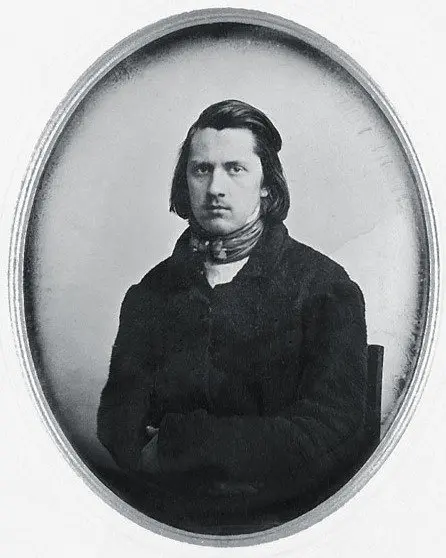
- Born
- 28 February 1824Vienna, Austria
- Died
- 23 January 1882Budapest, Hungary · aged 57
Karl Maria Kertbeny
He invented the word “homosexual” – and used it to argue against the criminal laws of his time.
Karl Maria Kertbeny was born Karl Maria Benkert in Vienna and grew up in Hungary; he later took the Hungarian-sounding name Kertbeny. He worked as a journalist and translator and brought the works of Hungarian poets such as Sándor Petőfi to German readers. He knew many famous writers of his time, from Heinrich Heine to Hans Christian Andersen.
In 1868, in a letter to Karl Heinrich Ulrichs, he coined the words “homosexual” and “heterosexual”. In 1869 he published two anonymous pamphlets against the Prussian law that punished sex between men, the forerunner of the later Paragraph 175. He argued that the state had no right to interfere in what consenting adults did in private, and that the law only made men vulnerable to blackmail.
Kertbeny said that he himself was not homosexual, and wrote that his engagement had been triggered by the suicide of a friend who was being blackmailed. Historians are divided as to whether this was true or a protective statement; his own orientation is not clearly documented.
He died in Budapest in 1882, aged 57, almost forgotten. The words he invented became part of every language.