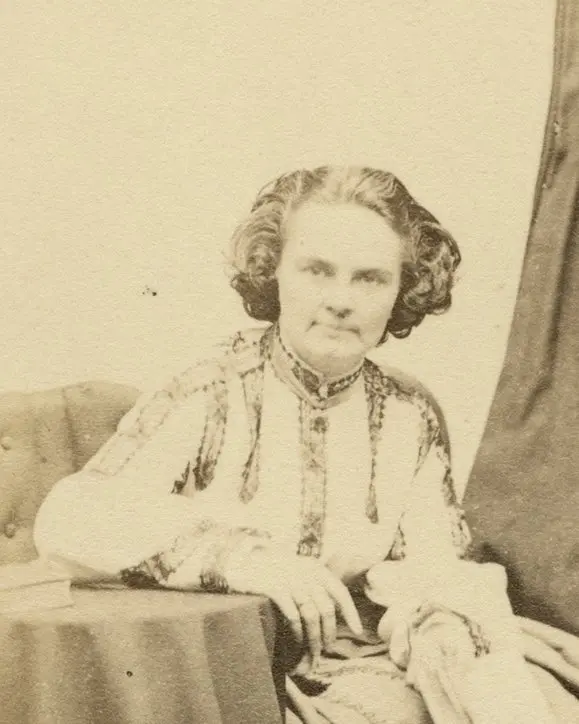
- Born
- 9 October 1830Watertown, Massachusetts, USA
- Died
- 21 February 1908Watertown, Massachusetts, USA · aged 77
Harriet Hosmer
A sculptor who built an independent career in Rome and challenged the limits placed on women artists.
Harriet Hosmer was born in Watertown, Massachusetts, in 1830. After her mother and siblings died, her father encouraged an active, unconventional childhood. Determined to sculpt, she found ways to study anatomy despite the restrictions that kept most women from the training available to men.
In 1852 she travelled to Rome, where she entered John Gibson’s studio. Working in marble in a neoclassical style, she attracted patrons with subjects ranging from the mischievous “Puck” to “Zenobia in Chains”, a captive queen whose dignity survives defeat.
Success also brought challenges to her authorship. When critics suggested that male assistants had produced her sculpture, Hosmer defended her skill and the legitimacy of studio practice. The dispute exposed how readily a woman’s achievement could be reassigned to men.
In Rome she belonged to the circle around Charlotte Cushman, where women could build careers and intimate lives outside conventional marriage. Her long relationship with Louisa, Lady Ashburton, survives in affectionate correspondence. Hosmer returned to the United States in her later years and died in Watertown in 1908, aged 77.