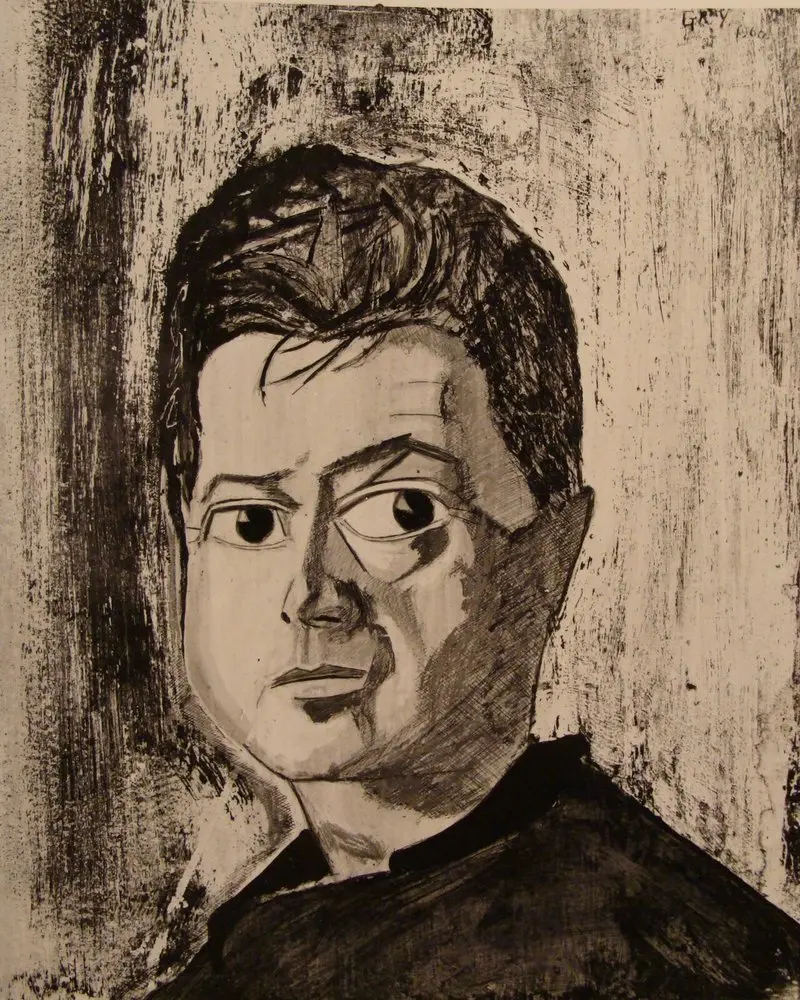
- Born
- 28 October 1909Dublin, Ireland
- Died
- 28 April 1992Madrid, Spain · aged 82
Francis Bacon
A painter whose distorted figures made desire, vulnerability and grief physically present.
Francis Bacon was born in Dublin in 1909. Raised by English parents, he left home as a teenager and spent time in London, Berlin and Paris. He worked in interior decoration before establishing himself as a painter, largely without formal training.
“Three Studies for Figures at the Base of a Crucifixion”, painted in 1944 and exhibited in 1945, brought him wider attention. Its strained, unsettling bodies anticipated work in which figures seem caught between recognisable flesh and dissolution. Bacon returned repeatedly to portraits, the crucifixion and the image of the pope after Velázquez.
His social world centred on friends, artists and Soho drinking clubs. He was open among those around him about his relationships with men, including Peter Lacy and George Dyer, while sex between men remained criminalised in Britain.
Dyer died in a Paris hotel in 1971, shortly before Bacon’s retrospective opened at the Grand Palais. Bacon’s subsequent paintings, including the so-called black triptychs, returned to his presence and absence. Their concentrated grief is inseparable from the wider violence and tenderness of Bacon’s work. Bacon died in Madrid in 1992, aged 82.