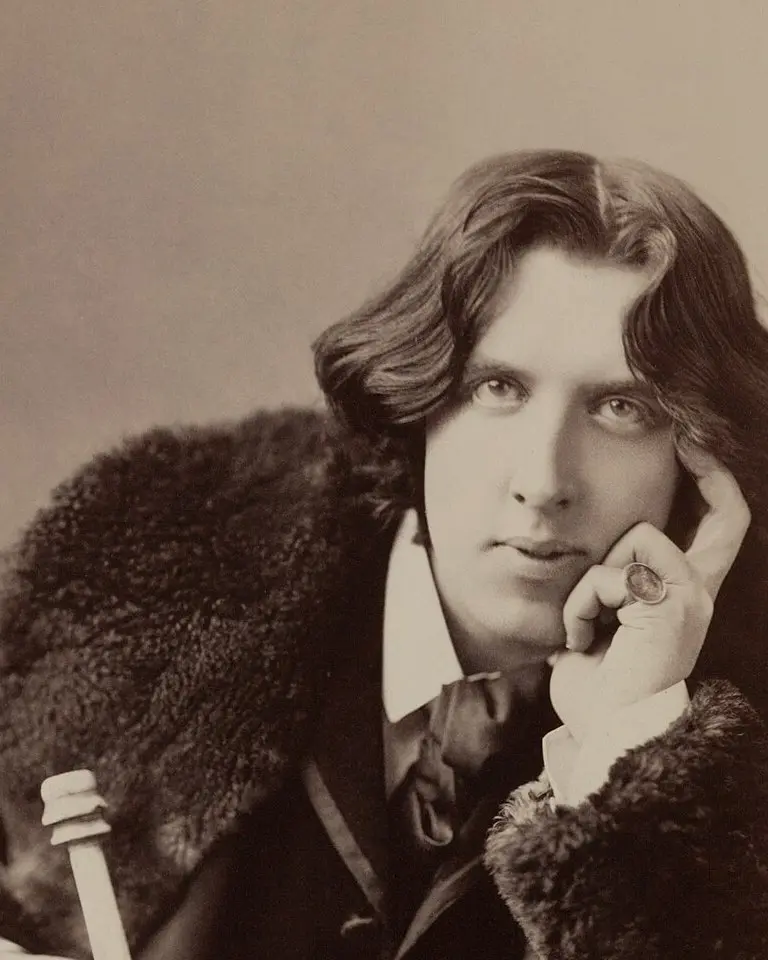
- Born
- 16 October 1854Dublin, Ireland
- Died
- 30 November 1900Paris, France · aged 46
Oscar Wilde
The wittiest writer of Victorian London was sent to prison for loving men – and became a symbol of gay persecution.
Oscar Wilde grew up in Dublin, the son of a famous eye surgeon and a nationalist poet. He studied classics in Dublin and at Oxford, where he became a leader of the Aesthetic movement, with its motto “art for art’s sake”. In London he became famous for his wit, his flamboyant clothes and his lectures.
In 1884 he married Constance Lloyd, with whom he had two sons. From around 1886 he had relationships with men, first with the young Robert Ross, later with Lord Alfred Douglas, known as “Bosie”. His novel “The Picture of Dorian Gray” (1890) caused a scandal because of its moral ambiguity and homoerotic undertones. His comedies, above all “The Importance of Being Earnest” (1895), made him the most celebrated playwright in London.
In 1895 Bosie’s father, the Marquess of Queensberry, publicly accused him of being a “sodomite”. Wilde sued for libel and lost; he was then tried for “gross indecency” and sentenced to two years’ hard labour. In prison he wrote “De Profundis”, a long letter to Bosie.
After his release he went into exile in France, poor and ill, and wrote “The Ballad of Reading Gaol”. He died in Paris in 1900, aged 46. In 2017 he was posthumously pardoned under British law.