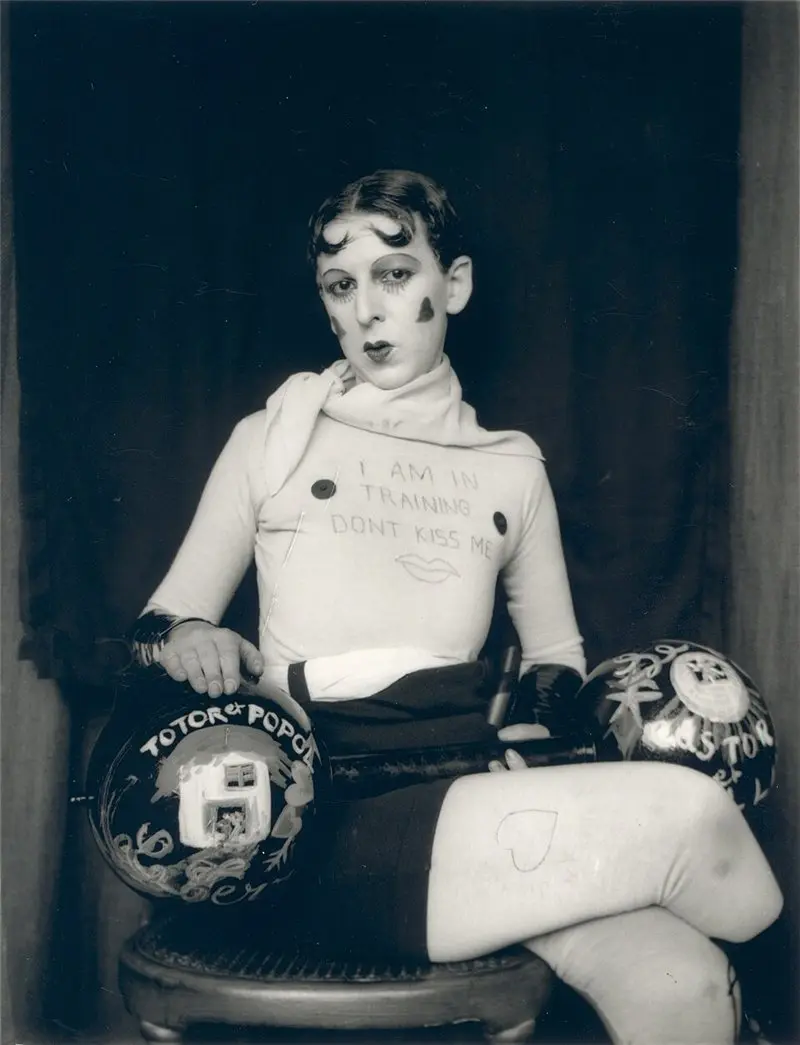
- Born
- 25 October 1894Nantes, France
- Died
- 8 December 1954Saint Helier, Jersey · aged 60
Claude Cahun
Cahun and Marcel Moore used photography to unsettle fixed identities and later worked together in resistance to Nazi occupation.
Claude Cahun was born in Nantes in 1894. Raised in a Jewish literary family, Cahun formed a lifelong partnership with Suzanne Malherbe, who worked as Marcel Moore. They became lovers and collaborators before their parents’ marriage also made them stepsiblings.
In Paris, the pair developed work associated with Surrealism. Cahun’s photographic self-portraits used costumes, masks, shaved hair and shifting poses to question the stability of identity. Moore’s contribution to the images and photomontages was part of an artistic partnership that later accounts have sometimes obscured.
The book “Aveux non avenus” (1930) brought writing and photomontage together in a refusal of straightforward autobiography. Cahun’s statements about gender similarly resist easy placement within the categories available then or now.
After moving to Jersey in 1937, Cahun and Moore remained during the German occupation. They created and distributed anti-Nazi texts intended to undermine soldiers’ confidence in the war. Arrested in 1944, they received death sentences but survived until liberation. Cahun died in 1954. The later rediscovery of their work restored both an inventive artistic practice and a record of shared resistance.