- Born
- 3 October 1882Tymoshivka, Ukraine
- Died
- 29 March 1937Lausanne, Switzerland · aged 54
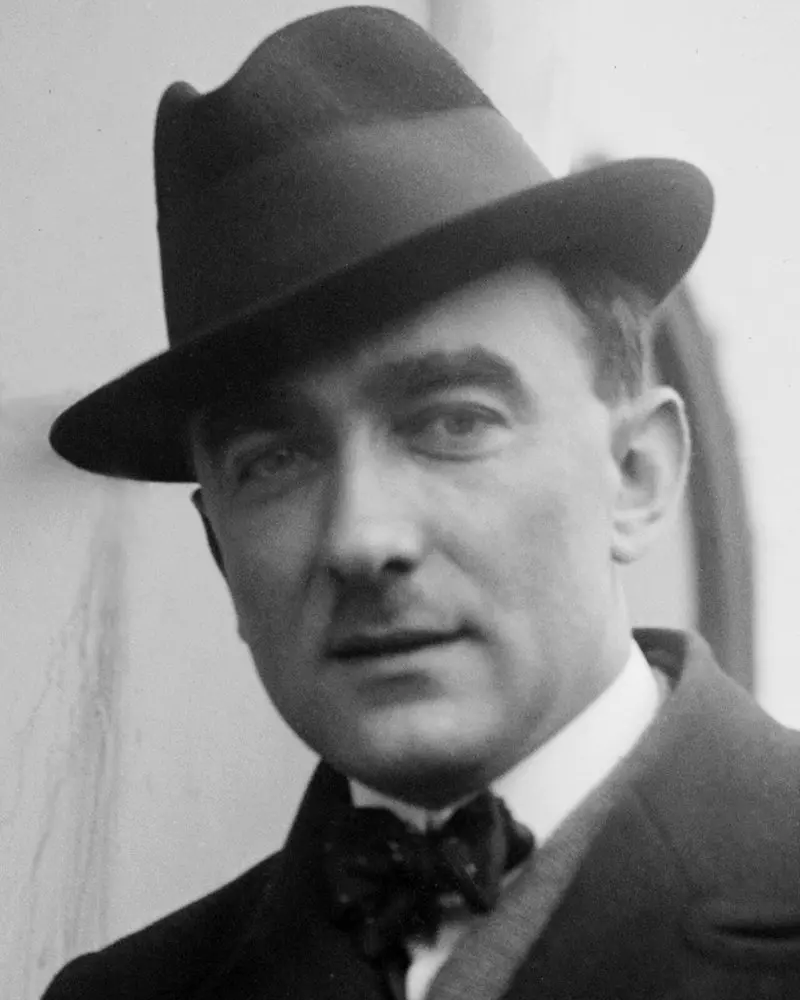
Karol Szymanowski
Poland’s greatest composer after Chopin wrote an opera about a king seduced by a beautiful shepherd – and a novel about love between men.
Karol Szymanowski was born into a family of Polish landowners on an estate in what is now Ukraine, then part of the Russian Empire. An injury in childhood left him with a limp, and he was educated at home, where music was part of daily life.
He studied in Warsaw and belonged to the circle of young composers known as “Young Poland in Music”. His travels to Sicily and North Africa before the First World War fascinated him: the culture of ancient Greece and the Islamic world shaped works such as the songs “Love Songs of Hafiz” and his richly coloured Violin Concerto No. 1.
Szymanowski loved men, and wrote about it more openly than most of his contemporaries. His novel “Efebos”, about love between men, was lost when his manuscript burned in Warsaw during the Second World War. His opera “King Roger” (1926) tells of a Sicilian king who is drawn away from his court and his faith by a mysterious, beautiful shepherd – a work often read as an expression of homoerotic desire.
In his later years he turned to the folk music of the Polish highlands and served as director of the Warsaw Conservatory. He died of tuberculosis in a sanatorium in Lausanne in 1937, aged 54.