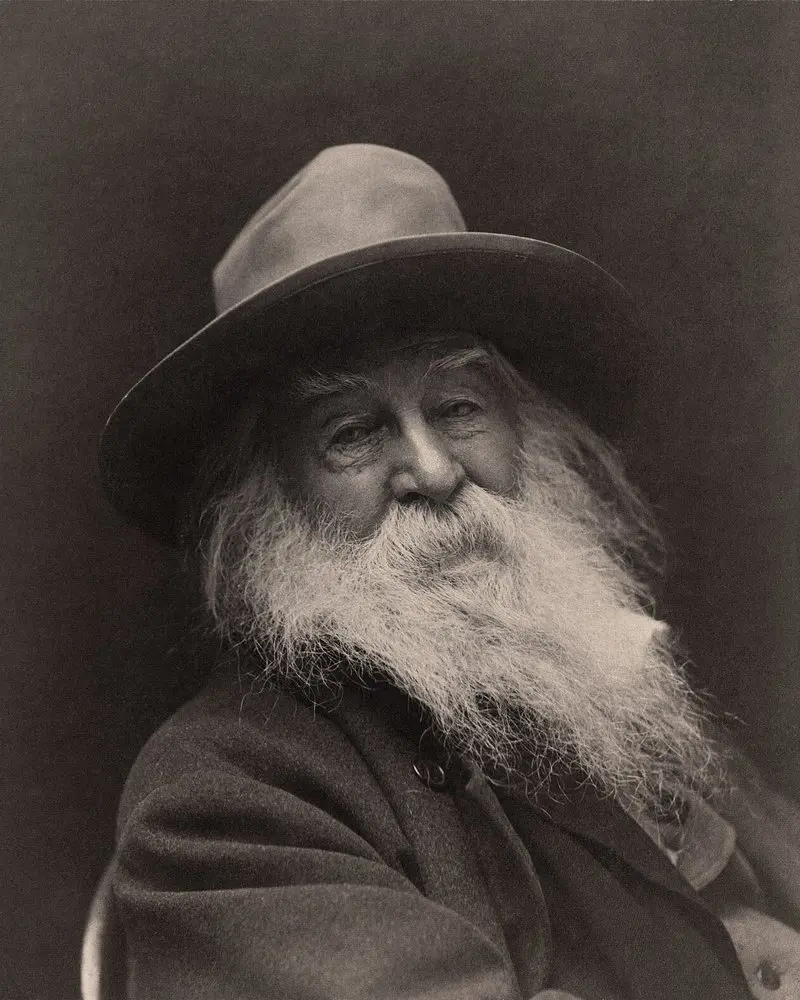
- Born
- 31 May 1819West Hills, New York, USA
- Died
- 26 March 1892Camden, New Jersey, USA · aged 72
Walt Whitman
The poet of “Leaves of Grass” celebrated the body and “the love of comrades” – and became an icon for gay men around the world.
Walt Whitman grew up on Long Island and in Brooklyn in a working-class family. He left school at eleven and worked as a printer, teacher and journalist.
In 1855 he published at his own expense “Leaves of Grass”, a collection of poems in free verse that celebrated democracy, nature, the body and sexuality. Many readers were shocked. Whitman spent his whole life expanding and revising the book. In the “Calamus” poems of 1860 he wrote about love between men, which he called “the manly love of comrades”.
During the Civil War he worked as a volunteer nurse in military hospitals in Washington, sitting with thousands of wounded soldiers. There he met the young streetcar conductor Peter Doyle, who became his closest companion for many years. In 1865 he lost his government job because of his “indecent” book.
When the English writer John Addington Symonds asked him directly about the meaning of the Calamus poems, Whitman denied it and claimed to have fathered six children. Historians today largely agree that he loved men. He died in Camden, New Jersey, in 1892, aged 72. Writers from Oscar Wilde to Allen Ginsberg revered him.