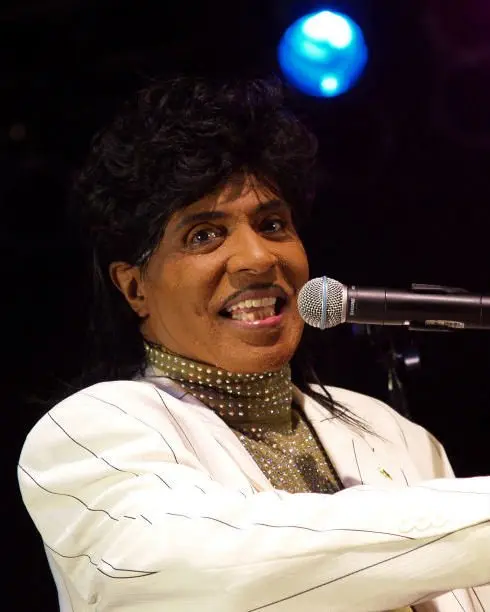
- Born
- 5 December 1932Macon, Georgia, USA
- Died
- 9 May 2020Tullahoma, Tennessee, USA · aged 87
Little Richard
Little Richard’s voice, piano and flamboyant stage presence helped define rock and roll, while his public accounts of sexuality shifted across his life.
Richard Penniman, known as Little Richard, was born in Macon, Georgia, in 1932. He grew up in a large religious family and found an early performing life in travelling shows. His exposure to gender play and queer performers helped shape a stage presence that challenged conventional masculinity.
“Tutti Frutti” (1955), followed by songs such as “Long Tall Sally” and “Good Golly, Miss Molly”, brought his explosive singing and piano playing to a mass audience. His sound influenced generations of musicians, while his pompadour, makeup and theatrical energy made him visually unmistakable.
His religious commitments repeatedly pulled against his musical and sexual life. He left rock and roll for preaching in 1957, later returning to secular performance. At different times he described himself as gay, bisexual or “omnisexual”; at others he condemned homosexuality through the language of his faith.
These shifts resist a simple story of either liberation or concealment. Little Richard died in Tennessee in 2020, aged eighty-seven. His work remains central to rock history and to accounts of queer influence on popular performance.