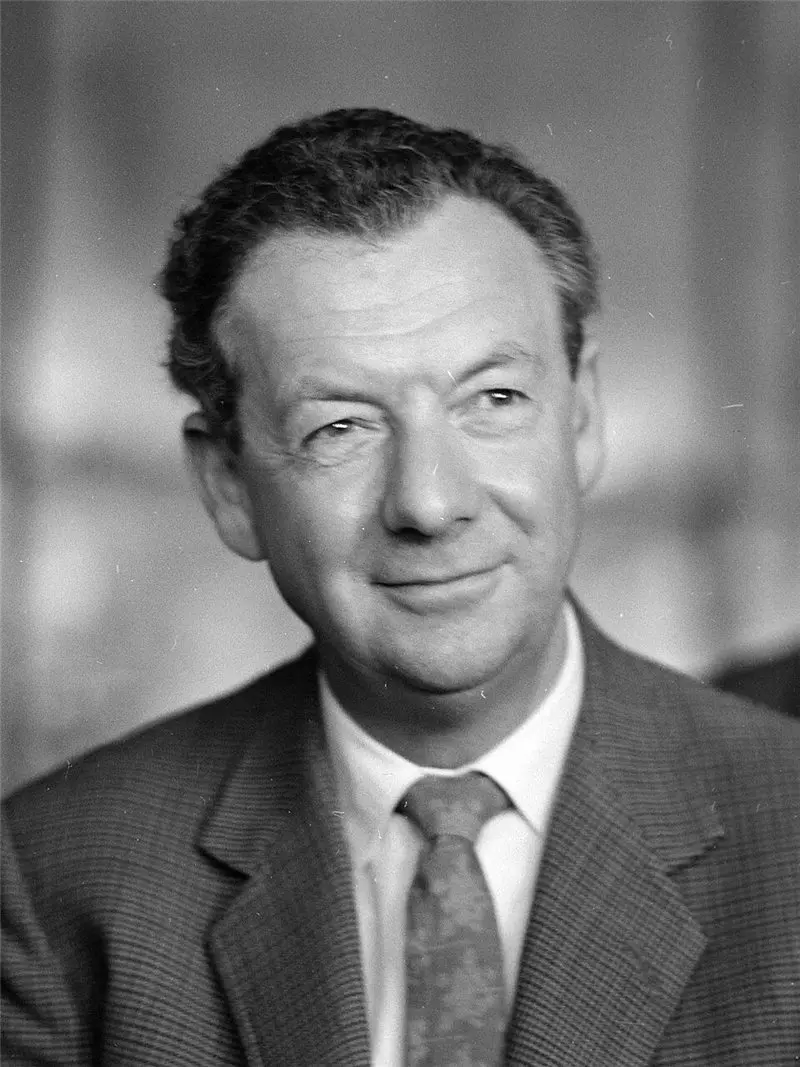
- Born
- 22 November 1913Lowestoft, England
- Died
- 4 December 1976Aldeburgh, England · aged 63
Benjamin Britten
His partnership with tenor Peter Pears shaped both his private life and some of the most distinctive music of the twentieth century.
Benjamin Britten was born in Lowestoft, England, in 1913. He composed from childhood and met the tenor Peter Pears in 1937. Their partnership lasted for the rest of Britten’s life, and Pears’s voice became central to many of his songs and operas.
The two spent the early years of the Second World War in the United States, returning to Britain in 1942. Both were conscientious objectors. “Peter Grimes” (1945), centred on a fisherman at odds with his community, established Britten as a leading opera composer.
Further operas included “Billy Budd” (1951) and “The Turn of the Screw” (1954). His “War Requiem” (1962), written for the consecration of the rebuilt Coventry Cathedral, combined the Latin requiem with Wilfred Owen’s war poetry. In 1948 Britten, Pears and librettist Eric Crozier founded the Aldeburgh Festival.
“Death in Venice” (1973), his final opera, explored an ageing writer’s attraction to an adolescent boy. Britten and Pears’s own relationship developed while sex between men remained criminalised in England. In 1976 Britten became the first composer to receive a life peerage. He died that year and was buried in Aldeburgh, where Pears was later buried beside him.