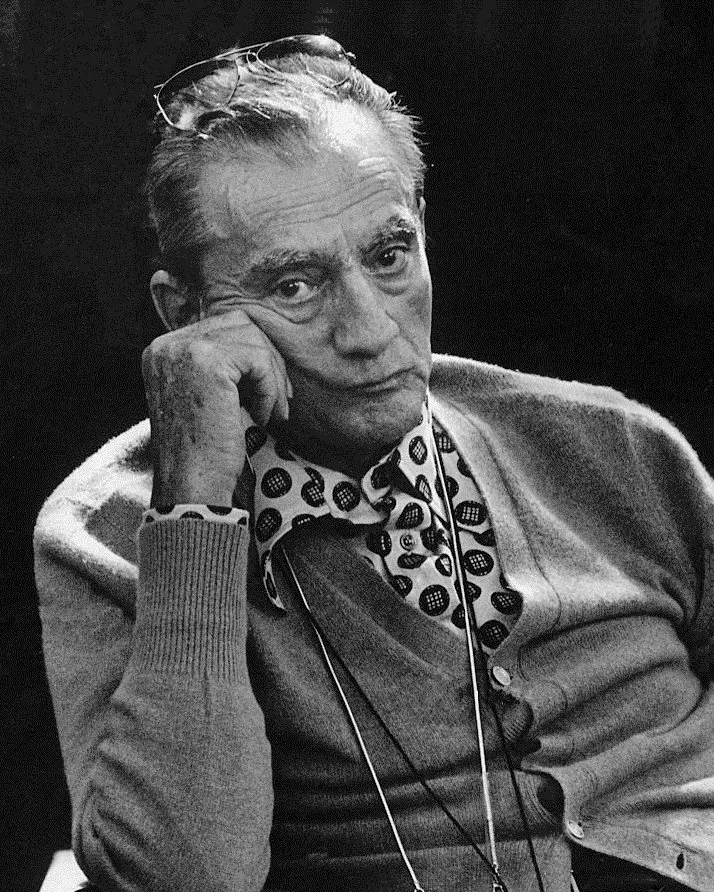
- Born
- 2 November 1906Milan, Italy
- Died
- 17 March 1976Rome, Italy · aged 69
Luchino Visconti
An aristocrat and communist who founded Italian neorealism, made “The Leopard” and “Death in Venice” – and lived openly among friends as a gay man.
Luchino Visconti came from one of the oldest noble families of Milan and grew up among opera, theatre and wealth. In the 1930s he worked in France as an assistant to the director Jean Renoir, who introduced him to left-wing politics.
His first film, “Ossessione” (1943), about poor people driven to crime, was condemned by the Fascist regime and is regarded as the first work of Italian neorealism. During the German occupation he supported the Resistance and was arrested. After the war he made “La terra trema” (1948) with Sicilian fishermen as actors, and later great epics about decline and history: “Senso” (1954), “Rocco and His Brothers” (1960) and “The Leopard” (1963), which won the Palme d’Or.
Visconti was gay, which was known in his circles but not discussed in public. Desire between men appears ever more openly in his late films: in “The Damned” (1969), in “Death in Venice” (1971), based on Thomas Mann’s novella about an ageing composer who falls for a beautiful boy, and in “Ludwig” (1973). His partner and muse in his last years was the Austrian actor Helmut Berger.
He also directed legendary opera productions with Maria Callas at La Scala. He died in Rome in 1976, aged 69.