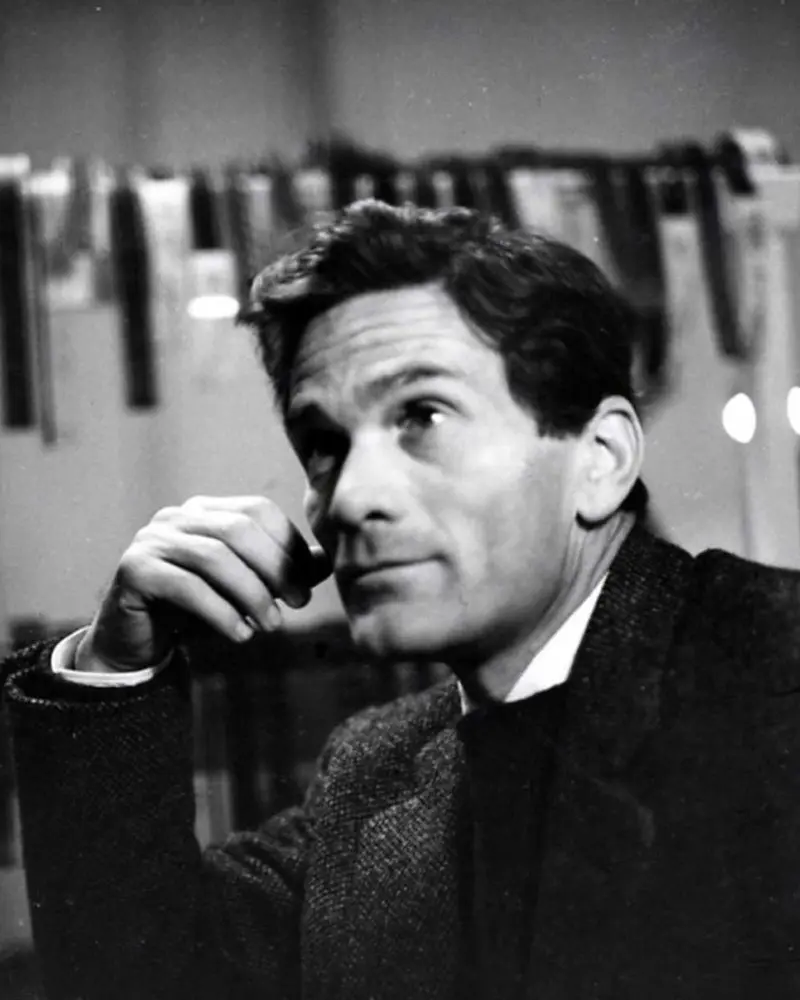
- Born
- 5 March 1922Bologna, Italy
- Died
- 2 November 1975Ostia, Rome, Italy · aged 53
Pier Paolo Pasolini
A Marxist, a Catholic and openly gay, he made some of the most radical films of the 20th century – and was murdered on a beach near Rome.
Pier Paolo Pasolini was born in Bologna, the son of an army officer, and spent much of his youth in his mother’s village of Casarsa in Friuli, where he wrote his first poems in the Friulian dialect. His younger brother, a partisan, was killed in 1945 in a clash between rival resistance groups.
In 1949 he was accused of sexual acts with teenage boys in the village; he lost his position as a teacher and was expelled from the Communist Party. With his mother he moved to Rome, where he lived in poverty on the outskirts. His novels “Ragazzi di vita” (1955) and “A Violent Life” (1959), about the young men of the Roman slums, were attacked for obscenity.
From 1961 he made films: “Accattone”, “The Gospel According to St. Matthew” (1964), “Teorema” (1968), the “Trilogy of Life” and finally “Salò, or the 120 Days of Sodom” (1975), a merciless allegory of fascism. As a journalist he attacked consumerism, the Christian Democrats and the conformity of the left. He lived openly as a gay man and was taken to court dozens of times.
In the night of 1–2 November 1975 he was beaten and run over on the beach at Ostia near Rome. A 17-year-old was convicted of the murder; he later withdrew his confession, and the circumstances of the crime remain disputed. Pasolini was 53.