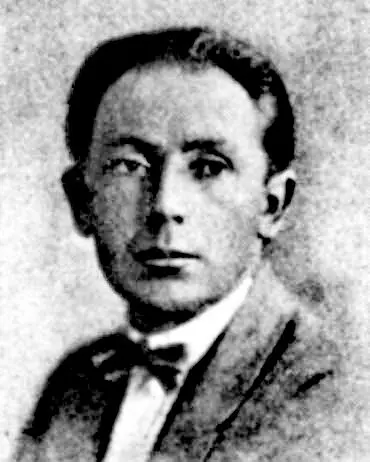
- Born
- 28 December 1888Bielefeld, Germany
- Died
- 11 March 1931Santa Barbara, California, USA · aged 42
F. W. Murnau
A silent-film director who found new ways to make movement, light and shadow tell a story.
Friedrich Wilhelm Murnau was born in Bielefeld in 1888. Originally named Plumpe, he studied in Berlin and Heidelberg before joining Max Reinhardt’s theatre world. He adopted the name Murnau after the Bavarian town associated with an artists’ circle he knew.
During the First World War he served in the army and aviation. The poet Hans Ehrenbaum-Degele, his close companion and lover, was killed in 1915. Their relationship belongs to the personal history behind a career usually discussed through its technical achievements.
Murnau’s “Nosferatu” (1922), an unauthorised adaptation of “Dracula”, became a defining horror film. “The Last Laugh” (1924) used a mobile camera to carry much of its story without intertitles, while “Faust” (1926) expanded his experiments with light and spectacle.
In Hollywood he made “Sunrise” (1927), honoured at the first Academy Awards. He later travelled to the South Seas to make “Tabu”, initially working with Robert Flaherty. Murnau died in 1931, aged 42, from injuries sustained in a car accident near Santa Barbara, shortly before “Tabu” opened.