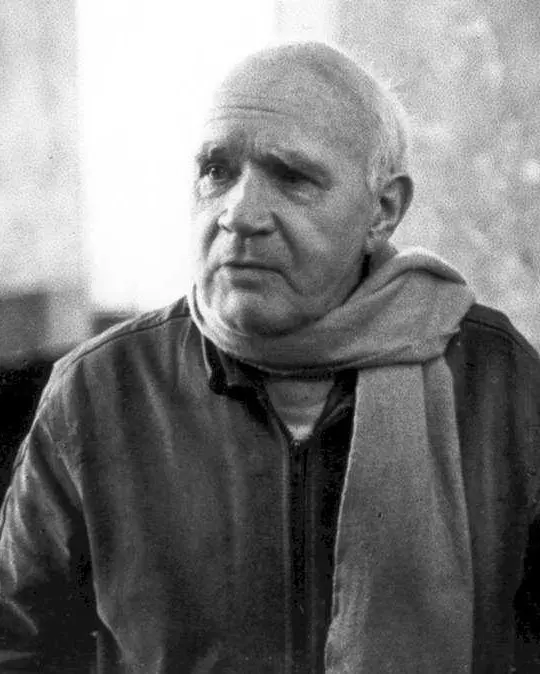
- Born
- 19 December 1910Paris, France
- Died
- 15 April 1986Paris, France · aged 75
Jean Genet
A writer who turned criminality, exclusion and desire into an unsettling literary world.
Jean Genet was born in Paris in 1910. Placed with a foster family in rural France, he later passed through a reformatory, military service, desertion and repeated imprisonment. Those experiences became material for writing that challenged the values through which society judged him.
He began “Our Lady of the Flowers” in prison in 1942. Its thieves, sex workers and drag queens occupy a world in which shame can become beauty and desire between men carries an intense imaginative force. “Miracle of the Rose” and “The Thief’s Journal” continued the transformation of experience into deliberately unstable self-portraiture.
Writers including Jean Cocteau and Jean-Paul Sartre supported him when further punishment threatened his freedom; a presidential pardon followed. Sartre’s “Saint Genet” helped establish his reputation. Genet’s plays, including “The Maids”, “The Balcony”, “The Blacks” and “The Screens”, moved his questions about power, performance and revolt onto the stage.
In later life he supported the Black Panthers and Palestinian struggles, turning again to the lives of people confronting state power. He died in a Paris hotel in 1986, aged 75, and was buried in Larache, Morocco.