- Born
- 17 July 1898Springfield, Ohio, USA
- Died
- 9 December 1991Monson, Maine, USA · aged 93
Berenice Abbott
She photographed the Paris avant-garde, helped preserve Atget’s archive and documented a changing New York.
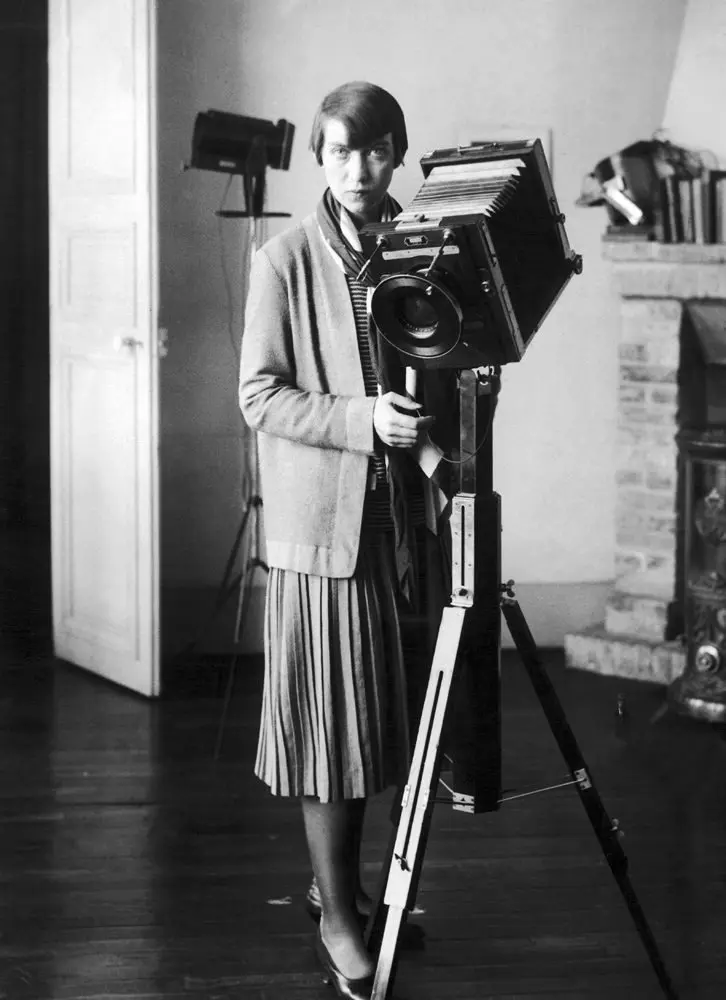
Berenice Abbott was born in Springfield, Ohio, in 1898. She moved to New York as a young woman and then to Paris in 1921. Working as Man Ray’s photographic assistant from 1923, she learned the medium before opening her own portrait studio.
Her subjects included James Joyce, Jean Cocteau and women from the artistic circles of the Left Bank. In Paris she also encountered Eugène Atget’s photographs. After his death in 1927, she and Julien Levy acquired much of his archive. Abbott spent decades promoting and preserving work that became fundamental to the history of photography.
Returning to New York in 1929, she began documenting a city being transformed by demolition and new construction. Federal Art Project support enabled her to develop “Changing New York”, whose photographs appeared in a book in 1939. Her attention to streets, buildings and the spaces between them made urban change visible in everyday detail.
Abbott later devoted substantial work to scientific photography, finding ways to show physical processes in still images. She shared her life with art critic Elizabeth McCausland for around thirty years. Abbott died in 1991, leaving distinct contributions to portraiture, documentary photography and the visual communication of science.