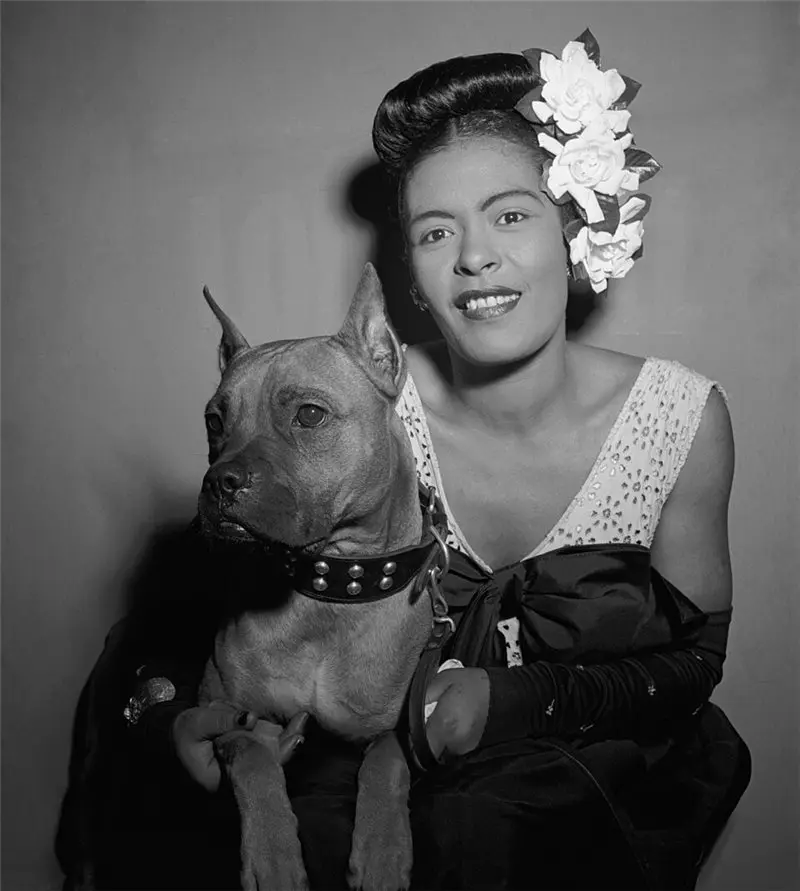
- Born
- 7 April 1915Philadelphia, Pennsylvania, USA
- Died
- 17 July 1959New York City, USA · aged 44
Billie Holiday
Her phrasing transformed popular songs, while “Strange Fruit” made the violence of lynching impossible to ignore.
Billie Holiday was born in Philadelphia in 1915. Originally named Eleanora Fagan, she grew up largely in Baltimore in circumstances marked by poverty and abuse. Singing in Harlem clubs brought her to the attention of producer John Hammond, and she made her first recordings in 1933.
Holiday’s phrasing could transform a familiar song, delaying a note or reshaping a line to give it an unexpected emotional weight. Collaborations with musicians such as Teddy Wilson and Lester Young helped establish her distinctive place in jazz.
In 1939 she recorded “Strange Fruit”, written by Abel Meeropol. Its account of lynching made it an enduring protest against racist violence. Holiday continued singing it despite hostility and the commercial risks surrounding the song.
Her private life included marriages to men and relationships with women. She also faced addiction, abusive relationships and repeated police attention. A drug conviction in 1947 led to imprisonment and the loss of the cabaret card needed to perform in New York clubs serving alcohol. Holiday died in 1959, aged 44, under police guard in hospital. Her artistic achievement extends far beyond the tragedies that often dominate accounts of her life.