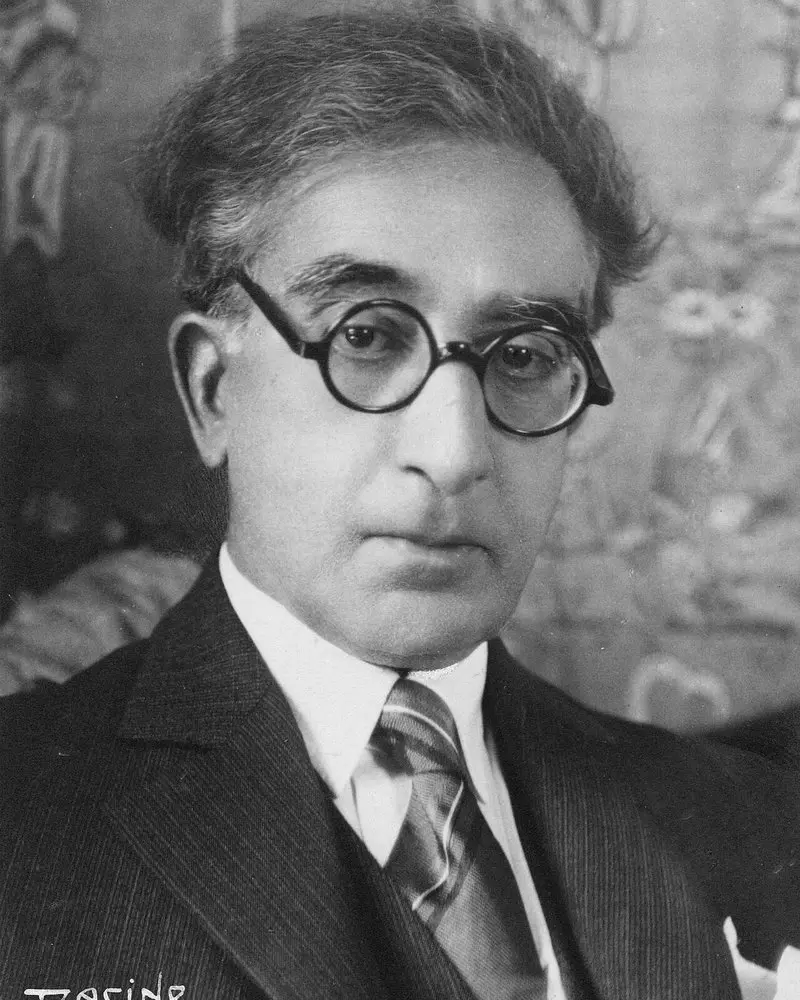
Constantine P. Cavafy
Cavafy’s poems gave lasting form to historical uncertainty and the memory of desire between men, often within a few carefully judged lines.
Constantine P. Cavafy was born in Alexandria in 1863. He belonged to a Greek merchant family and spent parts of his youth in England and Constantinople before settling again in Alexandria. For many years he supported himself through office work in the Egyptian public service.
Cavafy developed an unusual method of publication, printing poems on individual sheets and in small collections that he circulated to selected readers. The canon of his work contains 154 poems, alongside other surviving and unfinished writing.
His historical poems return to the Hellenistic world and late antiquity, exploring compromised power, failed expectations and the uncertain meaning of events. “Ithaka” and “Waiting for the Barbarians” became particularly influential. Other poems preserve encounters between men through remembered bodies, rooms and fleeting moments of happiness.
His treatment of desire combines candour with an awareness of concealment and loss. E. M. Forster helped introduce him to English-speaking readers. Cavafy died in Alexandria on his seventieth birthday in 1933. His dates here follow the Gregorian calendar.