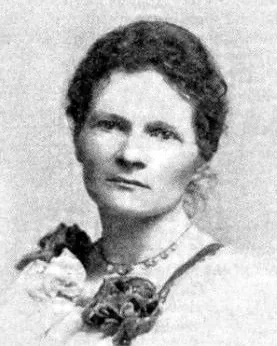
- Born
- 23 April 1859Kilrenny, United Kingdom
- Died
- 3 September 1918London, United Kingdom · aged 59
Margaret Todd
She studied medicine when women were barely allowed to, wrote novels under a man’s name, coined the word “isotope” – and lived with Sophia Jex-Blake.
Margaret Todd was born in Kilrenny in Fife, Scotland, and educated in Edinburgh, Glasgow and Berlin. She worked as a schoolteacher in Glasgow. In 1886 she became one of the first students at the Edinburgh School of Medicine for Women, founded by the medical pioneer Sophia Jex-Blake.
During her studies she wrote, under the male pseudonym Graham Travers, the novel “Mona Maclean, Medical Student” (1892), about a young woman studying medicine. “Punch” mocked it as a novel with the purpose of demonstrating “the indispensability of women-doctors”; the book was a success. Todd qualified in 1894, took her MD in Brussels and worked as a doctor at the Edinburgh Hospital and Dispensary for Women and Children. She published six novels and many short stories.
In 1913 the chemist Frederick Soddy, a family friend, explained to her his discovery that atoms of the same element can have different masses. Todd suggested calling them “isotopes”, Greek for “at the same place” – the term Soddy adopted and which is still used in science today.
Todd lived with Sophia Jex-Blake; biographers assume the two were a couple. After Jex-Blake retired in 1899 they moved together to a house in Sussex. After Jex-Blake’s death, Todd wrote “The Life of Dr Sophia Jex-Blake” (1918), a history of women’s struggle to enter the medical profession. She died in London three months after its publication, aged 59, and left money to promote women in medicine.