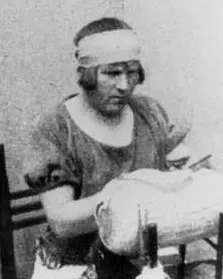
- Born
- 16 April 1892Ryžovna, Bohemia (today Czech Republic)
- Died
- 26 April 1966Allersberg, Germany · aged 74
Dora Richter
New archival discoveries show that a pioneer of trans healthcare survived Nazi rule and lived into the 1960s.
Dora Richter was born in Seifen, Bohemia, now called Ryžovna, in 1892. She grew up in the Ore Mountains and later moved to Berlin, where wearing women’s clothes could expose her to arrest and imprisonment.
At Magnus Hirschfeld’s Institute for Sexual Science, she found work and a setting in which she could live as a woman. Surgery began in 1922, followed by further procedures, including a vaginoplasty, in 1931. Her treatment is among the earliest documented surgical transitions of a trans woman.
For decades, accounts of Richter’s life ended with the Nazi destruction of the institute in 1933. Some assumed that she had been killed. Research into Czech and German records has established a different history: she returned to Czechoslovakia and obtained legal recognition of her name in 1934.
After the war she settled in Bavaria. Richter died in Allersberg on 26 April 1966, aged 74. The recovery of her later life changes the story from one of presumed disappearance to one of survival, while also showing how much depends on which records historians have been able to locate.