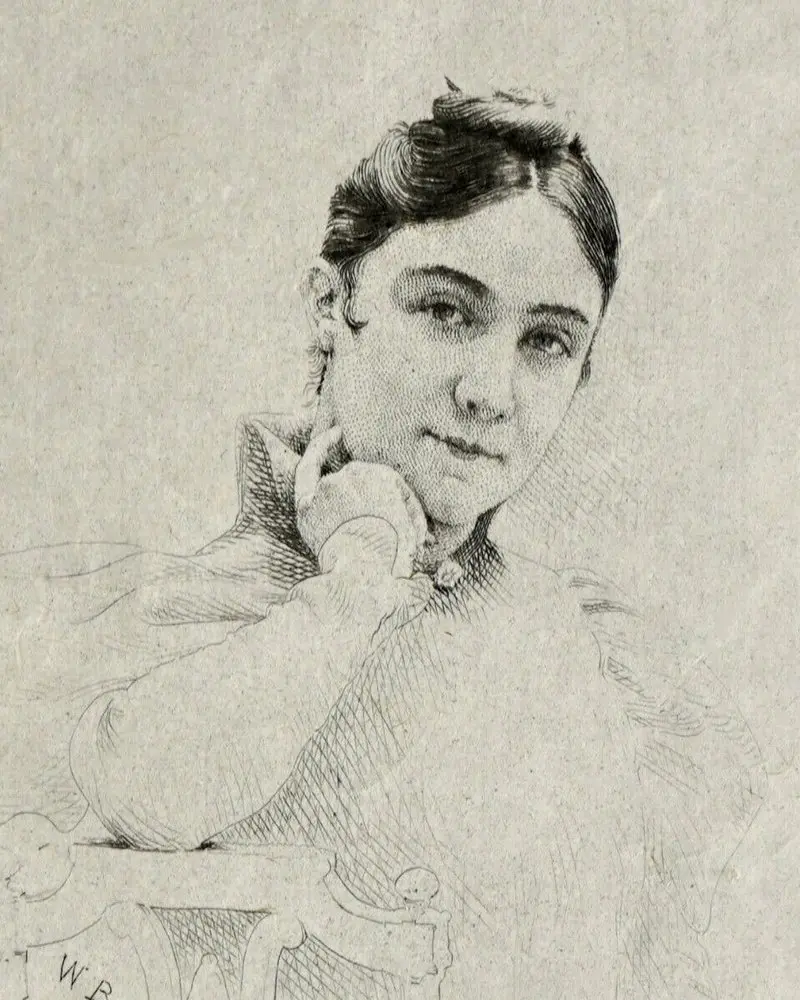
- Born
- 11 February 1860Château-l’Évêque, France
- Died
- 4 April 1953Paris, France · aged 93
Rachilde
Rachilde made gender reversal a disturbing literary experiment while resisting the political identity of a feminist writer.
Rachilde was born in Château-l’Évêque in 1860. Born Marguerite Eymery, she began writing while young and moved to Paris, adopting a public persona that played with masculine dress and literary authority.
“Monsieur Vénus” (1884) made her notorious. Its wealthy female protagonist reshapes a working-class man into the object of her desire, unsettling distinctions between masculine and feminine, subject and possession. The novel brought prosecution in Belgium and became a prominent work of the Decadent movement.
In 1889, Rachilde married Alfred Vallette. Their work around the revived “Mercure de France” and her salon placed her within the literary networks of Symbolism. Her writing and intimate friendships have encouraged later discussion of bisexuality and gender nonconformity, although those modern terms do not explain every aspect of her self-presentation.
In “Why I Am Not a Feminist” (1928), she rejected identification with the women’s movement. Rachilde died in Paris in 1953, aged ninety-three. Her fiction’s challenges to gender conventions therefore sit alongside political positions that resist a straightforward emancipatory reading.