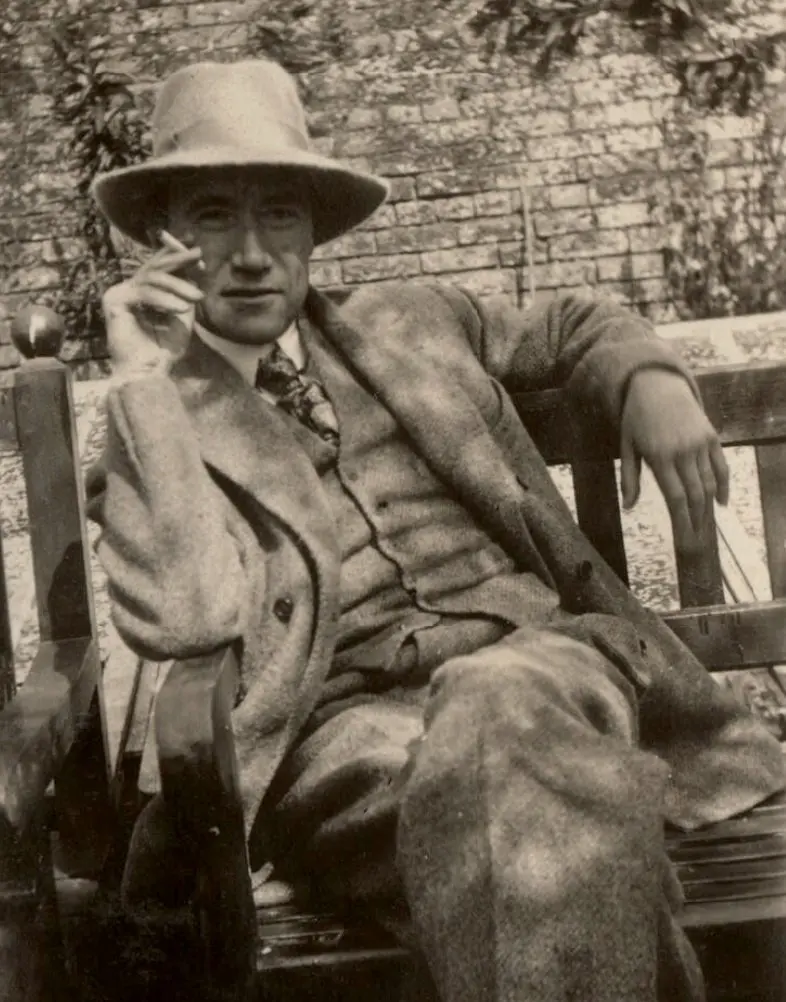
- Born
- 22 November 1869Paris, France
- Died
- 19 February 1951Paris, France · aged 81
André Gide
André Gide made the conflict between desire and inherited morality a central literary subject. His defence of homosexuality and criticism of oppressive systems also require scrutiny of the unequal relationships described in his own life.
André Paul Guillaume Gide was born in Paris in 1869. Raised in a strict Protestant household, he developed a lasting preoccupation with the conflict between personal desire and moral duty. His writing would return to that struggle through fiction, journals, criticism and accounts of travel, often refusing to offer readers a comfortable resolution.
Journeys to North Africa in the 1890s helped shape his understanding of his sexuality. An encounter with Oscar Wilde in 1895 became part of the story he later told about acknowledging desires that his upbringing had taught him to suppress. Travel offered distance from familiar expectations, while also placing him within the unequal structures of colonial society.
In 1895, he married his cousin Madeleine Rondeaux. Their difficult relationship accompanied a career increasingly concerned with the costs of repression and self-deception. “Les Nourritures terrestres”, “L'Immoraliste” and “La Porte étroite” approach those questions through different characters and forms, testing the claims of freedom against responsibility to others.
He helped establish the “Nouvelle Revue française” in 1909, contributing to an institution that became central to French literary life. His influence extended through correspondence and criticism as well as his own books, making him an important participant in arguments about what modern literature should attempt.
“Les Faux-monnayeurs” explored authenticity, imitation and the construction of a novel through interwoven lives and perspectives. Its formal questions belong to the same broader interest in how people invent accounts of themselves, and how those accounts can conceal motives from their authors as well as from others.
Gide published “Corydon” openly under his name in 1924, after earlier restricted editions. Its dialogues defended homosexuality against prevailing condemnation. His memoir “Si le grain ne meurt” followed in 1926, bringing intimate experience more directly into his public literary identity.
These interventions challenged repression, but their historical importance does not settle the ethical questions raised by his sexual accounts. His encounters with adolescent boys in colonial North Africa involved differences of age, wealth and power. They cannot simply be assimilated to a present-day narrative of equal relationships between consenting adults.
His public commitments also changed through experience. Writing about travel in Central Africa drew attention to abuses within colonial systems. After visiting the Soviet Union in 1936, he criticised a political order he had previously supported, accepting controversy rather than maintaining an earlier allegiance unchanged.
Gide received the Nobel Prize in Literature in 1947 and died in Paris on 19 February 1951. His works were placed on the Catholic Church's Index of Forbidden Books the following year. They continue to invite scrutiny of freedom and honesty, including the points at which his own pursuit of liberation failed to recognise another person's vulnerability.