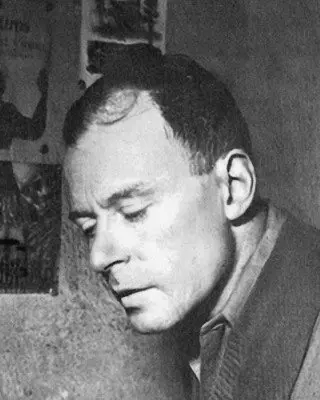
- Born
- 18 November 1906Munich, Germany
- Died
- 21 May 1949Cannes, France · aged 42
Klaus Mann
Thomas Mann’s son lived openly as a gay man in the 1920s, fought Nazism from exile and wrote “Mephisto”.
Klaus Mann was the eldest son of the novelist Thomas Mann. Together with his sister Erika he was one of the stars of the Weimar Republic’s young generation: they travelled the world, acted in theatre and provoked the respectable bourgeoisie. Klaus made no secret of loving men. His novel “Der fromme Tanz” (The Pious Dance, 1926) is one of the first German novels about gay life.
When the Nazis came to power in 1933, he went into exile, first in Amsterdam, where he edited the anti-fascist literary magazine “Die Sammlung”. His novel “Mephisto” (1936) portrays an actor who sells his soul to the Nazis to advance his career. Because the main character was modelled on the actor Gustaf Gründgens, the book was banned in West Germany for decades.
In the United States Klaus Mann became an American citizen and joined the US Army in 1943. He returned to Europe as a soldier and journalist and reported on the ruins of Germany. After the war he felt homeless and despairing about the political future.
He took his own life in Cannes in 1949, aged 42. His autobiography “The Turning Point” is one of the great documents of German exile.