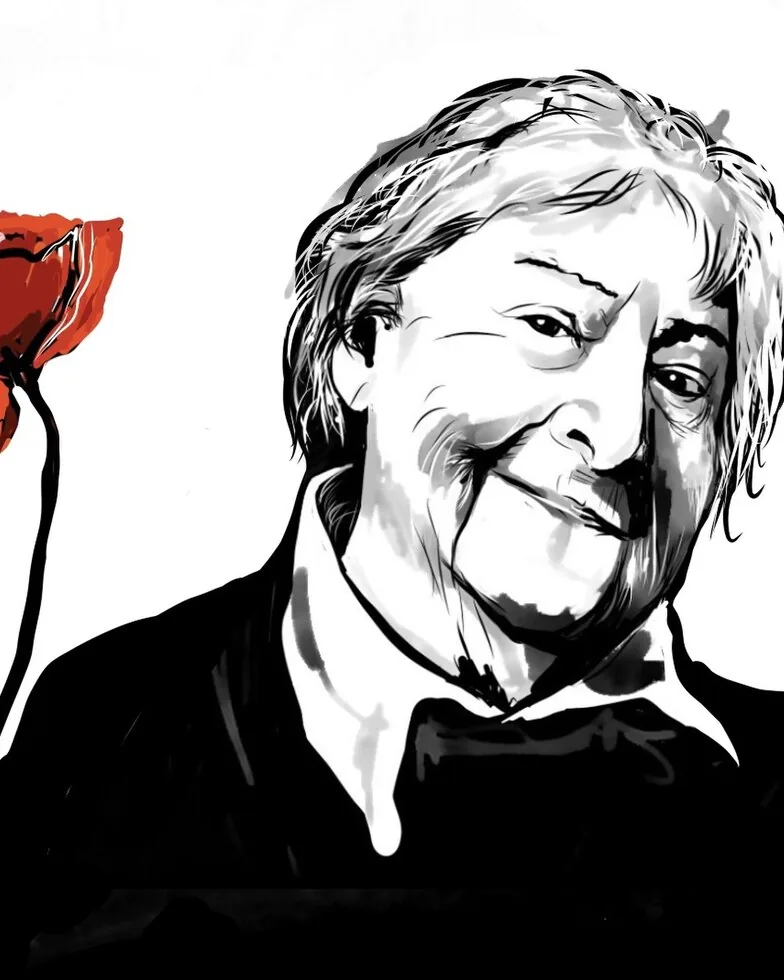
- Born
- 28 July 1917Madrid, Spain
- Died
- 27 November 1998Madrid, Spain · aged 81
Gloria Fuertes
Generations of Spanish children grew up with her poems – and under Franco she never concealed that she loved women.
Gloria Fuertes was born in Madrid into a working-class family; her mother was a seamstress and maid, her father a caretaker. She began writing and illustrating stories at five and published her first poem at 14. She trained in shorthand and typing and worked for years as an accountant and secretary while writing poems, plays and children’s stories.
The Spanish Civil War left a deep mark on her. “Without the tragedy of war, I might never have written poetry,” she said. Her poems are colloquial and full of humour and wordplay, and deal with love, loneliness, death and the absurdities of life. She belonged to the post-war movement of “postismo” and the Generation of ’50. In 1951 she co-founded a group of women poets that held readings in bars and cafés.
In 1961 a Fulbright scholarship took her to the United States, where she taught Spanish literature. From the 1970s she became famous throughout Spain through children’s television, where she recited her poems in her unmistakable voice. Books such as “Cangura para todo”, which received an honourable mention for the Hans Christian Andersen Award, became classics. In “Three Wise Queens” (1978) the Three Kings cannot go to Bethlehem and are replaced by their wives.
Fuertes never concealed that she was a lesbian, despite the Franco dictatorship. Her work also questioned the gender roles of the time. She died of lung cancer in Madrid in 1998, aged 81, and left her fortune to an orphanage.