- Born
- 15 January 1862Fullersburg, Illinois, USA
- Died
- 1 January 1928Paris, France · aged 65
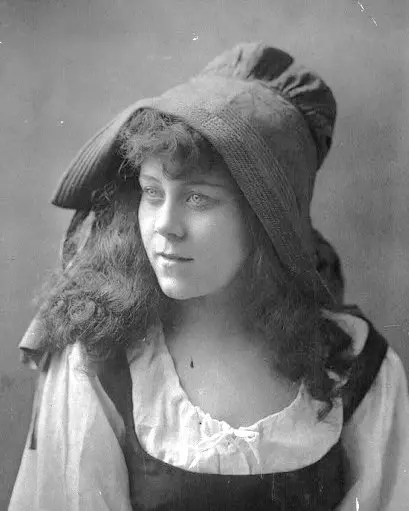
Loïe Fuller
Loïe Fuller transformed silk, movement and coloured light into a new kind of stage art, working closely with her partner Gabrielle Bloch.
Loïe Fuller was born in Fullersburg, Illinois, in 1862. She began performing as a child and worked in theatre and vaudeville before developing dances in which fabric and light became extensions of the moving body.
Her “Serpentine Dance” used long lengths of silk, supported by rods, to create shifting forms under coloured illumination. In Paris from 1892, her performances at the Folies Bergère made her a celebrated figure. Flowers, flames and wings seemed to emerge from a stage on which the dancer’s body could almost disappear.
Fuller patented theatrical inventions and investigated the possibilities of light and stage machinery. Her work fascinated artists associated with Art Nouveau and helped broaden the relationship between dance, visual art and technology. She also supported other performers and developed a company of dancers.
Her long-term partner Gabrielle Bloch, known as Gab Sorère, was an important artistic collaborator and continued the company’s work after her death. Fuller died in Paris on New Year’s Day 1928, aged sixty-five.