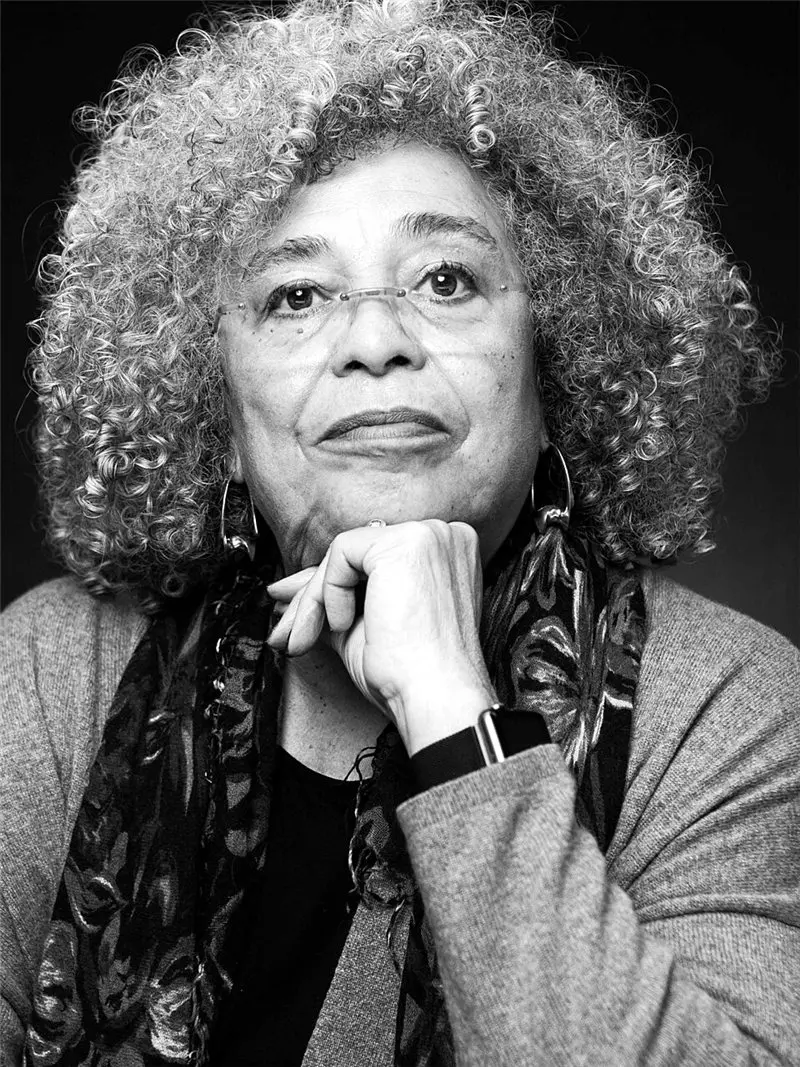
Angela Davis
Her acquittal after an international campaign was followed by decades of work on racism, feminism and prison abolition.
Angela Davis was born in Birmingham, Alabama, in 1944. She grew up in a neighbourhood targeted by white supremacist bombings and later studied philosophy in the United States and Germany, including with Herbert Marcuse.
In 1969 her Communist Party membership prompted the University of California to dismiss her from a teaching post at UCLA. A court ordered her reinstatement, but the university did not renew her appointment the following year. In 1970 weapons registered to her were used in a deadly attempt to free prisoners at a California courthouse. Arrested after a period in hiding, she became the focus of an international “Free Angela” campaign. A jury acquitted her of all charges in 1972.
Davis went on to develop an influential body of work connecting race, gender, class and incarceration. Her books include “Women, Race & Class” (1981) and “Are Prisons Obsolete?” (2003). She helped found Critical Resistance and taught for many years at the University of California, Santa Cruz.
In a 1997 interview with Out, she spoke publicly about being a lesbian. Her writing and organising have consistently connected struggles against racism, sexism and homophobia with a broader challenge to punitive institutions.