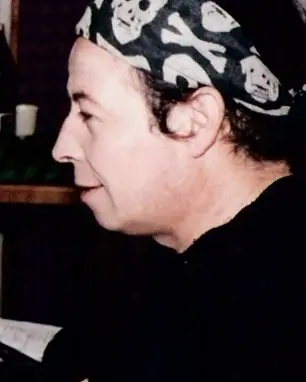
- Born
- 21 November 1952Santiago, Chile
- Died
- 23 January 2015Santiago, Chile · aged 62
Pedro Lemebel
Pedro Lemebel used performance and chronicles to confront dictatorship, class prejudice and homophobia, including within the Chilean left.
Pedro Lemebel was born in Santiago in 1952. He grew up in poverty, trained as an art teacher and later adopted his mother’s surname as his public name.
His 1986 manifesto “Hablo por mi diferencia” challenged the left to recognise the queer people whose lives it often dismissed. With Francisco Casas, he formed Las Yeguas del Apocalipsis in 1987. Their performances used bodies, clothing and public disruption to address dictatorship, AIDS and the limits of respectable opposition.
Lemebel’s chronicles followed people living at the edges of Santiago’s official image. Collections such as “La esquina es mi corazón” brought desire, poverty and political memory into a vivid spoken style. His novel “Tengo miedo torero” (2001) joined an unconventional love story to the history of resistance to Pinochet.
He refused the expectation that sexual or social difference should be made discreet before entering politics. Lemebel died in Santiago in 2015, aged sixty-two. His writing and performances continue to offer a sharp account of the people left outside national stories of progress.