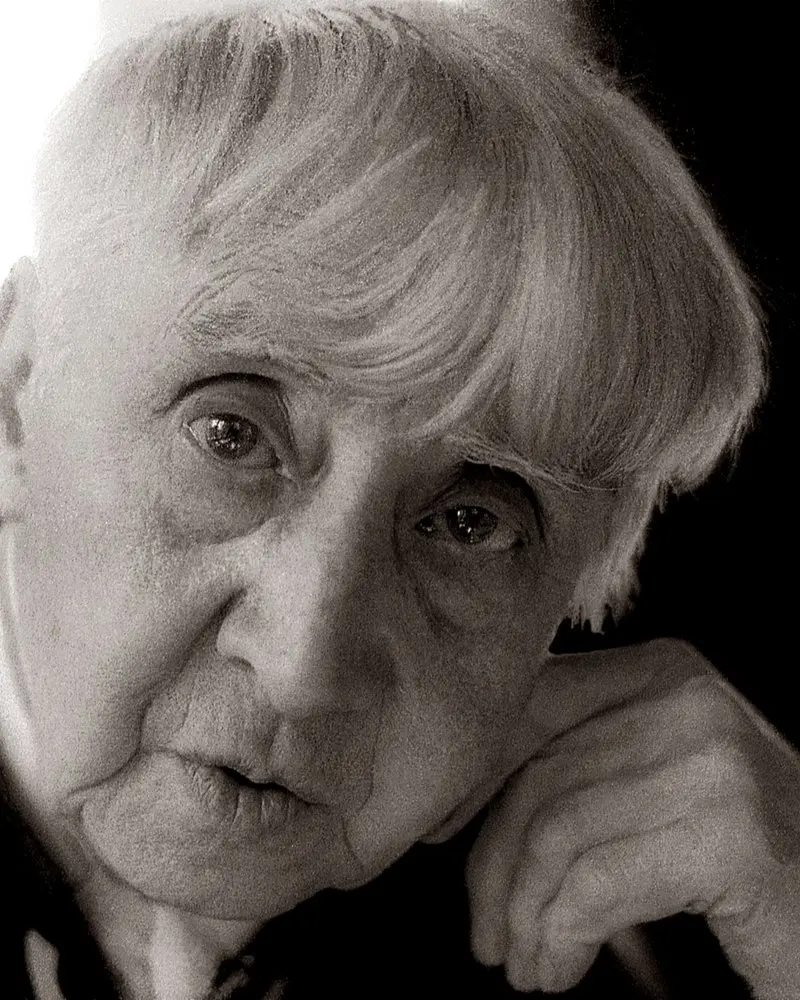
Hannah Höch
A Dada artist whose photomontages cut through the conventions of gender, politics and mass culture.
Hannah Höch was born in Gotha in 1889. She moved to Berlin in 1912 to study applied arts and later supported herself by designing patterns for women’s magazines. The imagery of commercial publishing became material for a very different kind of work.
Through her relationship with Raoul Hausmann, Höch became involved in Berlin Dada. She helped pioneer photomontage, cutting and recombining photographs and printed text to expose the absurdities of politics and social convention. “Cut with the Kitchen Knife Dada through the Last Weimar Beer-Belly Epoch of Germany” (1919–20) is among her best-known works.
Her male colleagues often treated her as an amateur despite her contribution. Höch’s images, meanwhile, questioned the promises attached to the fashionable “New Woman” and unsettled fixed ideas of masculine and feminine bodies.
From 1926 she shared her life with the Dutch writer Til Brugman for around nine years, living in The Hague and Berlin. Under Nazism she withdrew from public artistic life and preserved works by herself and fellow Dadaists. She died in Berlin in 1978, aged 88, after renewed recognition of her work.