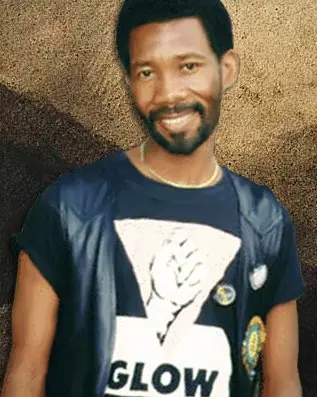
- Born
- 26 November 1957Soweto, South Africa
- Died
- 30 November 1998Johannesburg, South Africa · aged 41
Simon Nkoli
On trial for treason under apartheid, he came out as gay – and helped make South Africa the first country to protect gay people in its constitution.
Simon Nkoli grew up in Soweto and the Free State and became active against apartheid as a schoolboy during the Soweto uprising of 1976. As a young man he joined anti-apartheid organisations. At the same time, he realised that he was gay; his parents sent him to a psychologist and to traditional healers.
In 1984 he was arrested with other activists and charged with treason in the Delmas trial, one of the most important political trials of the apartheid era. In prison he came out to his co-defendants. Some wanted to exclude him, but leading ANC figures defended him. He was acquitted in 1988.
After his release he founded the Gay and Lesbian Organisation of the Witwatersrand (GLOW) and in 1990 organised the first Pride march in Johannesburg. His argument that the fight against apartheid and the fight against homophobia belonged together convinced many in the ANC. In 1996 South Africa became the first country in the world to protect people against discrimination on the basis of sexual orientation in its constitution.
Nkoli was one of the first Black South Africans to speak publicly about living with HIV. He died of AIDS-related illness in 1998, aged 41. His death inspired the founding of the Treatment Action Campaign.