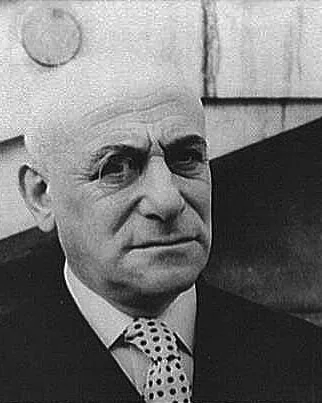
- Born
- 12 July 1876Quimper, France
- Died
- 5 March 1944Drancy, France · aged 67
Max Jacob
Max Jacob helped shape modern French poetry and lived between artistic sociability and religious retreat. His Catholic baptism did not protect him from Nazi persecution as a Jew.
Max Jacob was born in Quimper, France, in 1876.
He grew up in a Jewish family in Brittany and moved to Paris to pursue an artistic life. Earning a living through a succession of jobs, he wrote, painted and entered the circles in which modern art was taking shape. His friendship with Pablo Picasso began in 1901, when neither man occupied the position in cultural history that he would later acquire.
For a time, Jacob and Picasso shared modest accommodation. Their friendship belonged to a wider network that included poets and painters such as Guillaume Apollinaire and Amedeo Modigliani. Jacob was a lively presence in this world: a conversationalist, performer and correspondent as well as an author whose work moved between humour, strangeness and spiritual inquiry.
His prose-poem collection ‘Le Cornet à dés’, published in 1917, became one of his most important books. Short narratives, startling images and abrupt changes of register loosened the boundaries between a poem, an anecdote and a dream. His work helped open possibilities for later experimental writing, although attaching him to a single movement cannot account for its variety.
Painting remained another means of expression. He made gouaches, drawings and other works, including scenes connected with Brittany. Exhibitions and friendships with painters ensured that his visual and literary lives continued to overlap. The collections preserved in Quimper bring these different activities into the same account of his career.
Jacob’s religious life was equally significant. After describing a vision of Christ in 1909, he was baptised as a Catholic in 1915, with Picasso as his godfather. Faith offered a structure for his life and writing, but did not remove his conflicts over desire. His attraction to men and his relationships have to be understood alongside, rather than erased by, his religious commitments.
He first withdrew to Saint-Benoît-sur-Loire in the 1920s and returned there permanently in 1936. Living near the abbey, he attended services, wrote extensively and maintained contact with friends. The retreat did not place him outside the dangers of the occupation.
Under Nazi racial policy, his baptism did not alter his Jewish ancestry. Members of his family were deported, and he was arrested in February 1944. Transferred to Drancy, he died there of pneumonia on 5 March 1944, aged 67, before his planned deportation.
His surviving books, pictures and letters preserve a life that persecution attempted to extinguish: comic and devout, socially connected and often lonely, with an influence extending across the arts.