- Born
- 27 February 1880Boston, USA
- Died
- 10 June 1958New York City, USA · aged 78
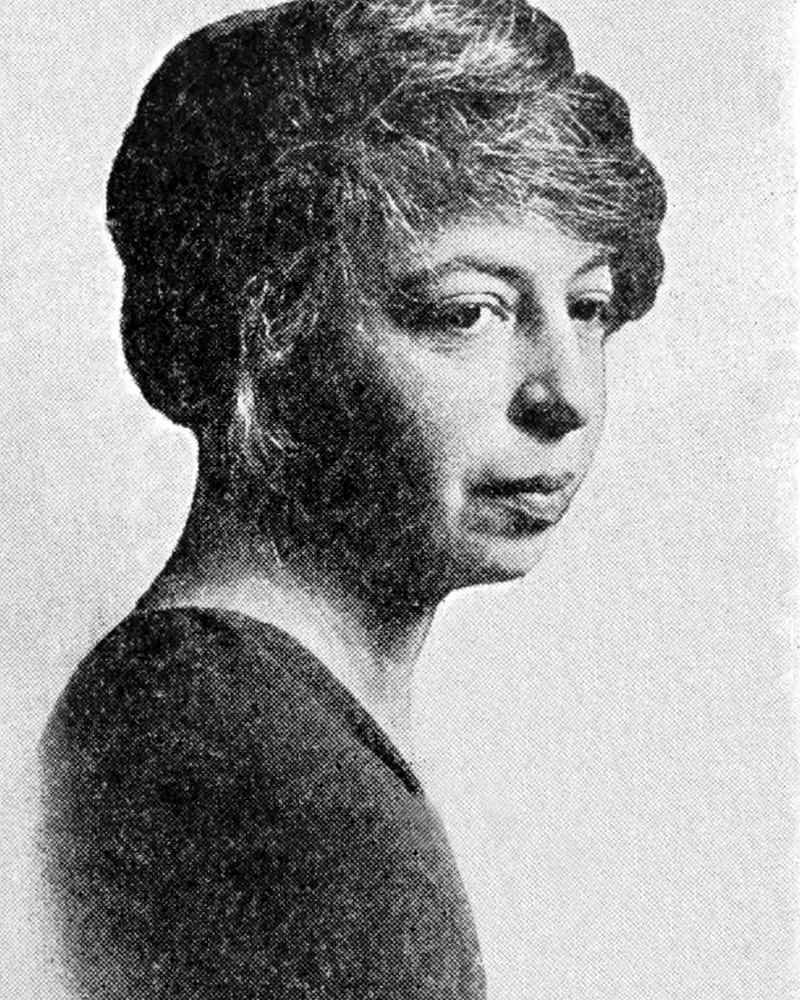
Angelina Weld Grimké
She wrote one of the first plays against lynching – and in her letters and unpublished poems, she wrote of her love for women.
Angelina Weld Grimké was born in Boston. Her father, Archibald Grimké, was the son of a white slave owner and an enslaved woman and became one of the first Black graduates of Harvard Law School; her white mother left the family soon after her birth. She was named after her great-aunt, the abolitionist Angelina Grimké Weld. She grew up with her father and with her uncle’s family in Washington, D.C.
She trained in physical education in Boston and from 1902 taught English at Black schools in segregated Washington, including the renowned Dunbar High School. Her poems, essays and stories appeared in “The Crisis”, the magazine of the NAACP edited by W. E. B. Du Bois, and in the anthologies of the Harlem Renaissance.
Her play “Rachel”, written for the NAACP in response to the racist film “The Birth of a Nation”, was performed in 1916 by an all-Black cast. It was one of the first plays by an African-American woman to be staged publicly and one of the first to protest against lynching. Much of her later work also dealt with racial violence.
At 16 she wrote to a girlfriend that she hoped she would one day become “my love, my wife”. Her diaries and unpublished poems speak of love for women; in her published poems it is expressed only in coded form. After her father’s death in 1930 she moved to New York, where she lived in seclusion until her death in 1958. Today she is regarded as one of the first Black lesbian voices in American literature.