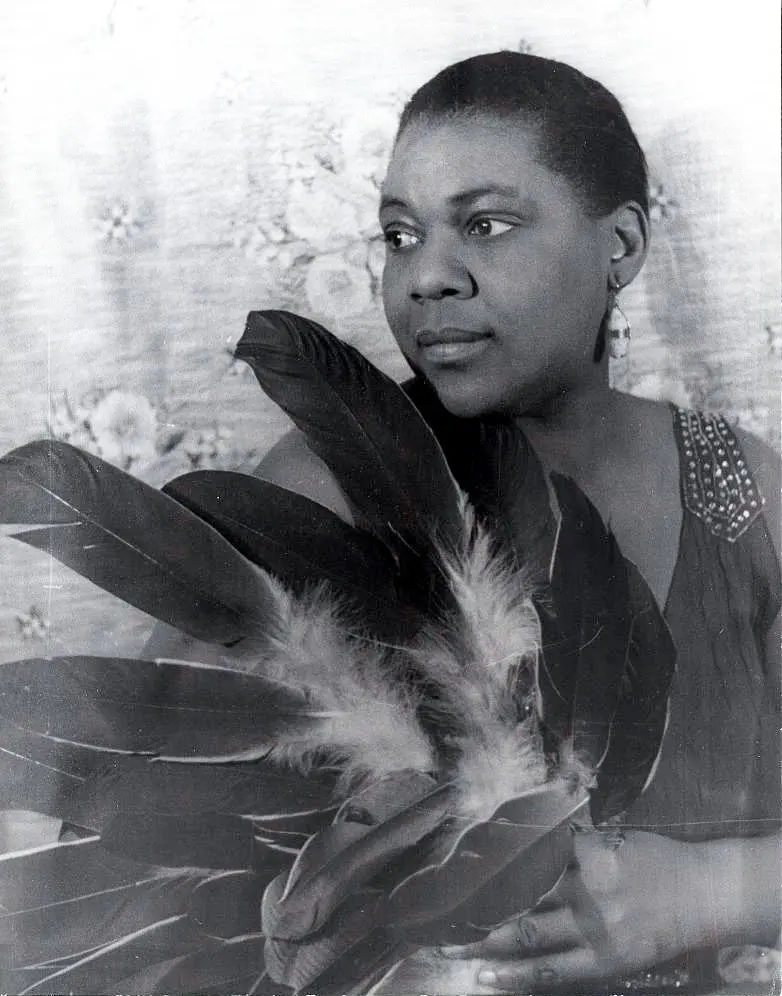
- Born
- 15 April 1894Chattanooga, Tennessee, USA
- Died
- 26 September 1937Clarksdale, Mississippi, USA · aged 43
Bessie Smith
The “Empress of the Blues” made Black women’s lives and desires central to some of the era’s most influential recordings.
Bessie Smith was born in Chattanooga, Tennessee, in 1894. Orphaned as a child, she performed on the streets for money before joining a travelling show as a teenager. There she met Ma Rainey and began developing a career on the touring circuit.
Her 1923 recording of “Downhearted Blues”, written by Alberta Hunter and Lovie Austin, became a major success. Over the following decade she made around 160 recordings for Columbia. Known as the “Empress of the Blues”, she became one of the highest-paid Black entertainers of the 1920s.
Smith’s powerful voice and command of rhythm gave authority to songs about poverty, disappointment, independence and desire. Her influence reached later singers including Billie Holiday and Janis Joplin. Although married, she also had relationships with women; biographers describe affairs within her touring company.
She died in 1937 after a car accident in Mississippi. Her grave remained without a headstone until 1970, when Joplin and Juanita Green, who had known Smith, paid for one. Smith’s recordings preserve both the scale of her vocal artistry and the emotional world of the audiences for whom she sang.