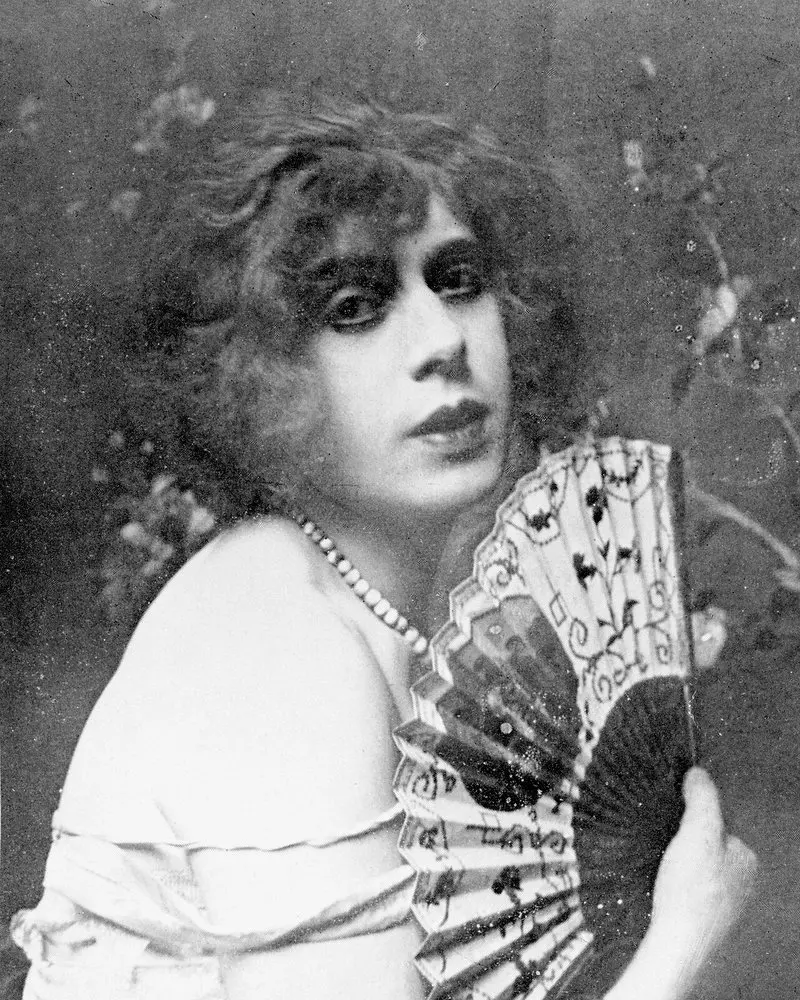
- Born
- 28 December 1882Vejle, Denmark
- Died
- 13 September 1931Dresden, Germany · aged 48
Lili Elbe
Lili Elbe’s life as a painter and trans woman became one of the earliest widely circulated accounts of gender-affirming surgery.
Lili Elbe was born in Vejle in 1882. She studied at the Royal Danish Academy of Fine Arts, where she met the painter Gerda Gottlieb. They married in 1904 and built artistic careers, later spending much of their life together in Paris.
Elbe painted landscapes and became a frequent subject of Gerda’s portraits. Accounts of her life describe how posing in women’s clothing opened a space in which she could live more fully as Lili. These accounts were later edited and published, and their details require care when used as straightforward biography.
In 1930 she travelled to Germany, seeking help at Magnus Hirschfeld’s Institute for Sexual Science and undergoing operations in Berlin and Dresden. Her marriage was annulled, and she obtained documents recognising her female identity. She hoped for a different personal future, including marriage and motherhood.
Elbe died in Dresden in September 1931, aged forty-eight, following further surgery. Her life inspired David Ebershoff’s novel “The Danish Girl” and its 2015 film adaptation, both fictional treatments rather than documentary accounts.