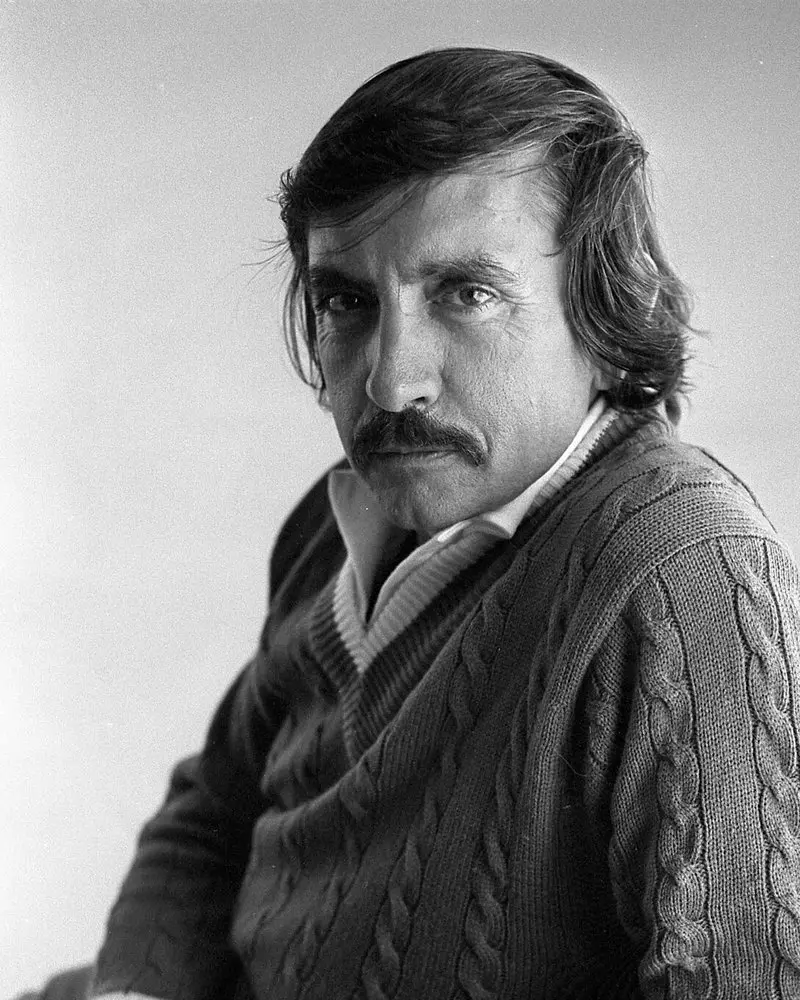
- Born
- 12 March 1928Washington, D.C., USA
- Died
- 16 September 2016Montauk, New York, USA · aged 88
Edward Albee
His plays exposed the strain beneath respectable family life, while he resisted the idea that sexuality should define a writer’s range.
Edward Albee was born in Washington, D.C., in 1928. Adopted into a wealthy family, he had a difficult relationship with his parents, left several schools and eventually made an independent life in Greenwich Village.
“The Zoo Story” (1958) established his distinctive theatrical voice through an encounter that turns ordinary conversation into confrontation. “Who’s Afraid of Virginia Woolf?” (1962) brought a married couple’s destructive games to Broadway and later to the screen, with Elizabeth Taylor and Richard Burton.
Albee won three Pulitzer Prizes for Drama, for “A Delicate Balance”, “Seascape” and “Three Tall Women”. His work returned repeatedly to family, dependency and the stories people invent to protect themselves from uncomfortable knowledge.
Openly gay, he shared his life for more than thirty years with artist Jonathan Thomas, who died in 2005. Albee resisted being defined as a gay playwright, arguing for a writer’s ability to imagine lives beyond his own. He also rejected the suggestion that his married characters should automatically be read as disguised gay couples. Albee died at his home in Montauk in 2016, aged 88.