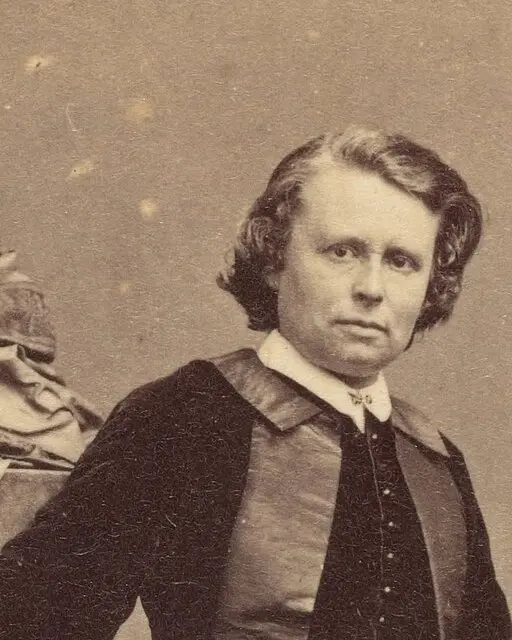
- Born
- 16 March 1822Bordeaux, France
- Died
- 25 May 1899Thomery, France · aged 77
Rosa Bonheur
The most famous woman painter of the 19th century needed a police permit to wear trousers – and lived for over forty years with Nathalie Micas.
Rosa Bonheur grew up in Bordeaux and Paris, the daughter of a drawing teacher who believed in the equality of women. She learned to paint from him and studied animals in the slaughterhouses and livestock markets of Paris. To move freely in these places, she obtained a police permit allowing her to wear trousers, which was otherwise forbidden for women in France.
Her large paintings of animals made her famous: “Ploughing in the Nivernais” (1849) and above all “The Horse Fair” (1853–55), today in the Metropolitan Museum of Art in New York. She was celebrated in Britain and the United States and became the most famous female painter of her century. In 1865 she was the first woman artist to be awarded the Legion of Honour.
Bonheur never married. For over forty years she lived with her childhood friend Nathalie Micas, with whom she shared a house and studio at the château of By near Fontainebleau. After Micas’s death she lived with the American painter Anna Klumpke, whom she made her heir. Bonheur herself avoided labels; many historians see these relationships as lesbian partnerships, while others warn against such interpretations.
She died at By in 1899, aged 77, and was buried with Micas and later Klumpke in the same grave in Paris.