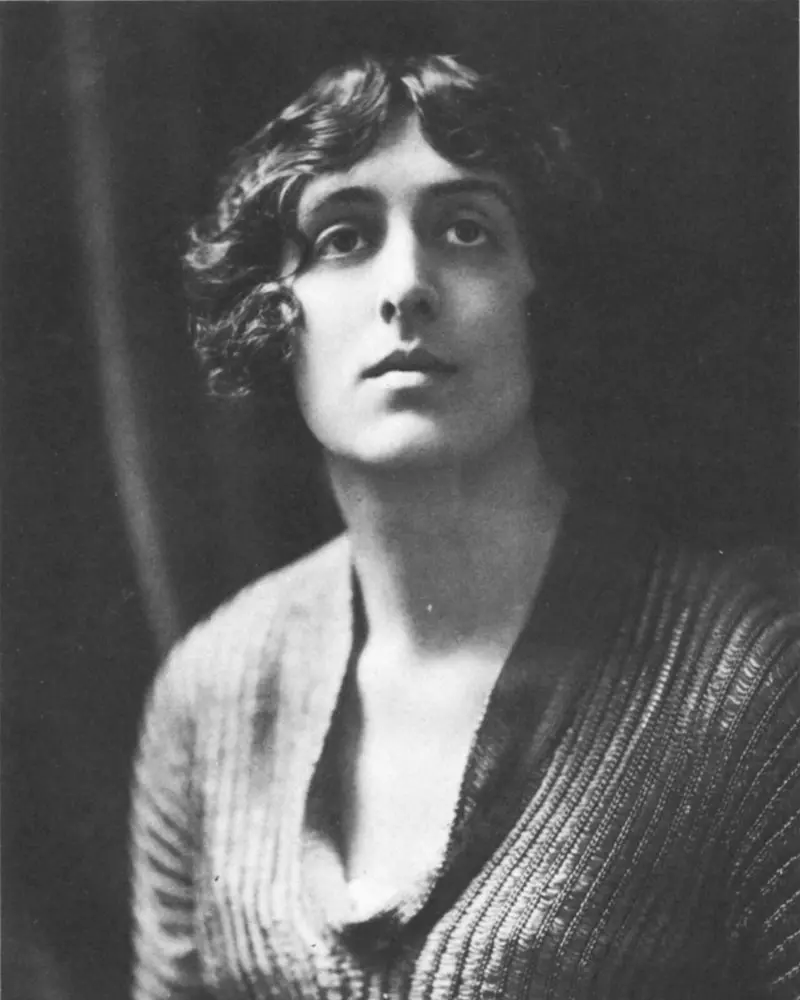
- Born
- 9 March 1892Knole, England
- Died
- 2 June 1962Sissinghurst, England · aged 70
Vita Sackville-West
Vita Sackville-West’s writing, relationships and garden-making gave different forms to a desire for independence, within a marriage that allowed both partners attachments beyond it.
Vita Sackville-West was born at Knole, Kent, in 1892. The great house shaped her sense of history and belonging, but the rules of inheritance prevented her from succeeding to it as a woman. That exclusion remained emotionally important, entering her writing and the imaginative importance she attached to making another home.
In 1913, she married the diplomat and writer Harold Nicolson. They had two sons and developed a lasting partnership that permitted relationships with people of their own sex. Affection and a shared understanding supported the marriage, though such arrangements did not remove jealousy or the consequences of other attachments.
Her relationship with Violet Trefusis grew from an earlier friendship into an intense affair. They travelled to France together, where Vita sometimes wore men’s clothes and used the name Julian. The attempted escape from their established lives put both marriages under pressure, and their husbands intervened to bring them home.
The experience later entered Vita’s novel “Challenge”. Her own autobiographical account, combined with Harold’s correspondence and their son Nigel Nicolson’s commentary, became “Portrait of a Marriage” in 1973. Its publication made the emotional arrangements within the family available to a public that had previously seen a more conventional outward appearance.
Vita met Virginia Woolf in 1922, beginning a relationship that developed through love, friendship and an extensive correspondence. Woolf drew on Vita, her family history and Knole for “Orlando”, giving a figure inspired by her the freedom to pass through centuries and change sex. The novel offered an imaginative form of inheritance unavailable through the actual estate.
Sackville-West was also a prolific author in her own right. “The Edwardians” became a bestseller, while “All Passion Spent” explored an older woman’s refusal to spend her remaining life according to her family’s expectations. Poetry brought further recognition, including the Hawthornden Prize. Her literary career extended well beyond being the subject of another writer’s book.
In 1930, she and Harold acquired Sissinghurst Castle in Kent. Their collaboration turned its neglected grounds into a garden whose architecture and planting depended on different but complementary interests. Vita’s writing room in the tower placed literary work within the place she was creating.
Gardening journalism carried her observations to readers who might never encounter the novels or poems. The White Garden became particularly associated with Sissinghurst, although the whole site grew from years of experiment and labour.
She died at Sissinghurst on 2 June 1962, aged seventy. The garden, books and correspondence preserve distinct achievements connected by an effort to make room for desire, creative work and a life less restricted by inherited rules.