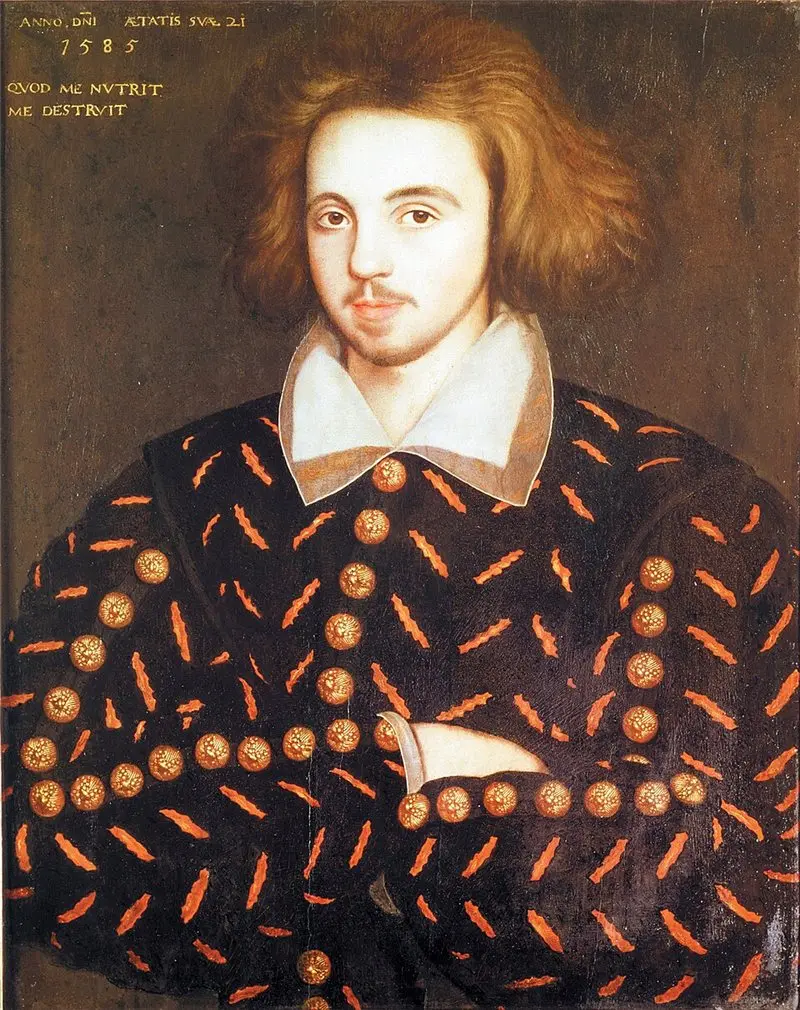
- Born
- 1564Canterbury, England
- Died
- 30 May 1593Deptford, England
Christopher Marlowe
His plays gave male desire a place on the Elizabethan stage, though the evidence about his own sexuality remains uncertain.
Christopher Marlowe was born in Canterbury in 1564. The son of a shoemaker, he was baptised there in February and later studied at Cambridge on a scholarship. Evidence of government intervention in his university career has encouraged speculation about work for the Elizabethan intelligence service.
In a short theatrical career, Marlowe helped establish the power of blank verse in plays including “Tamburlaine”, “Doctor Faustus” and “The Jew of Malta”. His ambitious, defiant protagonists challenged both political and religious authority.
“Edward II” made the king’s attachment to Piers Gaveston central to a struggle over power, loyalty and royal conduct. “Hero and Leander” also dwells on male beauty. These works have made Marlowe important to histories of same-sex desire in English literature.
Claims about his private beliefs and sexual life are less secure. Accusations of atheism and sexual misconduct came through hostile testimony whose reliability remains disputed. On 30 May 1593 he was killed in Deptford, aged 29. The official account of the encounter and the circumstances around it continue to attract debate, but speculation should not be mistaken for a settled biography.