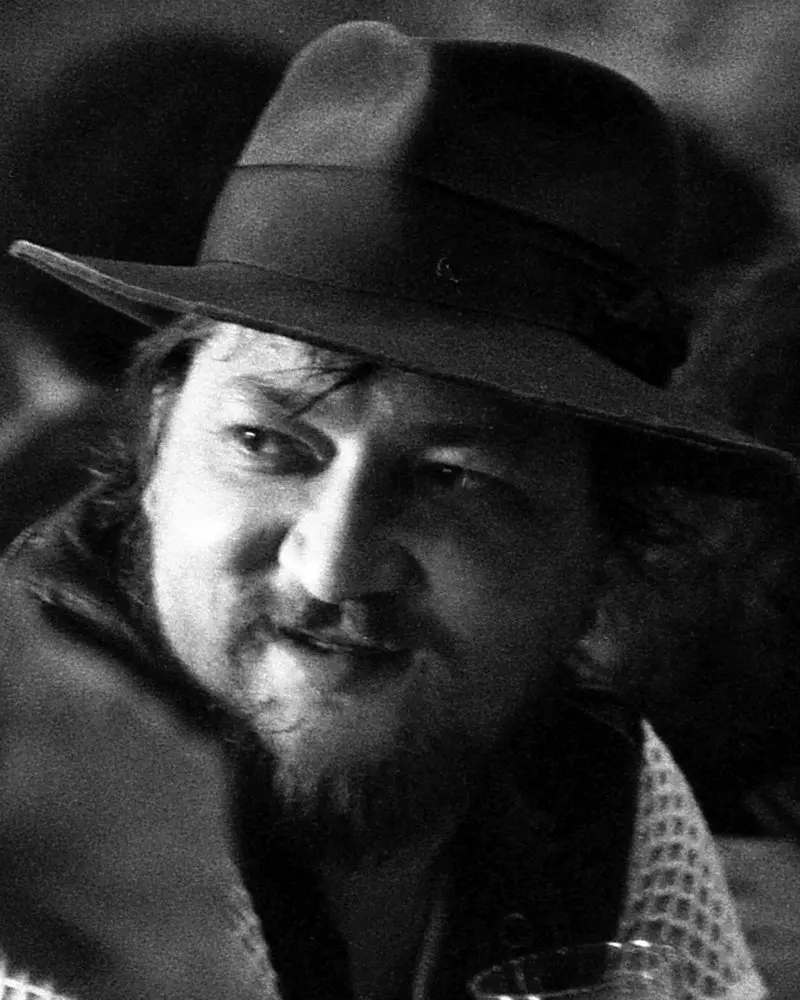
- Born
- 31 May 1945Bad Wörishofen, Germany
- Died
- 10 June 1982Munich, Germany · aged 37
Rainer Werner Fassbinder
In just 13 years he made more than 40 films – about love, exploitation and outsiders, including gay men like himself.
Rainer Werner Fassbinder grew up in Munich, the son of a doctor and a translator; his parents separated when he was a child, and he spent many hours alone at the cinema. In the late 1960s he led the “antiteater”, a theatre collective in Munich, with which he made his first films.
Between 1969 and 1982 he made more than 40 films and television series, working with a regular troupe of actors. Inspired by Hollywood melodrama, he told stories about love as a form of exploitation, about migrants, prisoners and gay men, and about Germany after the Nazi era. Among his best-known works are “Ali: Fear Eats the Soul” (1974), “The Marriage of Maria Braun” (1979) and the television series “Berlin Alexanderplatz” (1980).
Fassbinder had relationships with both men and women and spoke openly about it. In “Fox and His Friends” (1975) he played a working-class gay man exploited by his bourgeois lover, and his last film, “Querelle” (1982), based on Jean Genet, was openly homoerotic. Two of his partners, El Hedi ben Salem and Armin Meier, died tragically.
Exhausted by work and drugs, he died in Munich in 1982, aged 37. He is regarded as the central figure of New German Cinema.