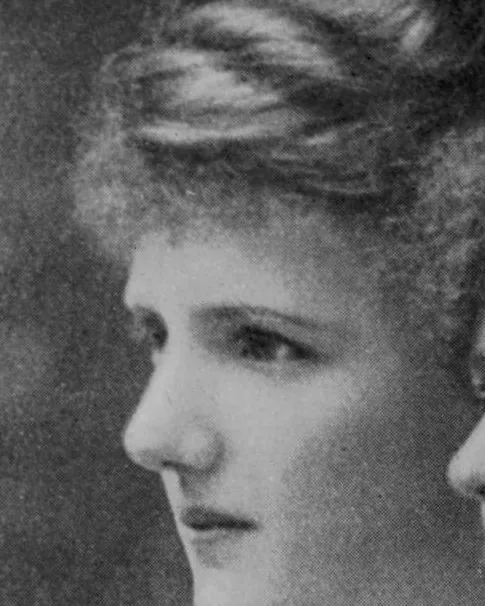
- Born
- 22 May 1870Lissadell, Ireland
- Died
- 30 June 1926London, United Kingdom · aged 56
Eva Gore-Booth
Eva Gore-Booth linked women's suffrage to the rights of working women, while her poetry and partnership with Esther Roper accompanied a radical questioning of gender roles.
Eva Gore-Booth was born at Lissadell in County Sligo, Ireland, in 1870. She grew up in an Anglo-Irish landowning family, younger sister to the future revolutionary Constance Markievicz. The family's privilege existed beside severe rural poverty. Experiences of relief work during the famine of 1879 helped shape her concern for people whose lives differed profoundly from her own.
She received a broad education in languages and literature and began writing poetry. In 1896, while recovering from illness in Italy, she met Esther Roper, a suffrage organiser based in Manchester. Their connection developed into a lifelong partnership. The following year, Gore-Booth moved to Manchester, making a decisive change from the social world in which she had been raised.
With Roper, she worked among women whose employment was insecure, poorly paid or threatened by legislation presented as protective. Barmaids, performers, flower sellers and women working around coal mines were among those whose interests they defended. The right to earn a living mattered alongside the demand for safer conditions and fair treatment. Excluding women from an occupation could deepen dependence rather than solve exploitation.
Their suffrage politics grew from that practical work. Gore-Booth argued that working women's voices should be heard within a movement often associated with more prosperous campaigners. Organising through trade unions and suffrage groups connected political representation to wages, employment and the distribution of power in everyday life.
Her commitments extended beyond a single campaign. She opposed war, supported vegetarianism and explored spiritual and mystical ideas. Poetry and drama remained central to her expression of those concerns. Her literary work should therefore be read alongside the organising, rather than treated as an ornamental interest belonging to an otherwise political life.
In 1916, Gore-Booth and Roper joined Thomas Baty, also known as Irene Clyde, Jessey Wade and Dorothy Cornish in founding “Urania”. The privately circulated journal challenged the idea that humanity must be divided into fixed categories of men and women. It gathered accounts of same-sex relationships and variations in gender across different societies, offering readers evidence against supposedly universal social rules.
Gore-Booth died in London on 30 June 1926, aged 56. Roper preserved her writing and was later buried with her in Hampstead. Their shared work connected personal partnership with sustained political collaboration. Gore-Booth's history brings together questions often separated in retrospect: who can work, who can vote, how people may live together and whether gender must dictate the possibilities available to them.